

RE-NATU-RING a Neighborhood Street
A case study of Constantin Meunierstraat in Leuven, Belgium.
This case study explores how a conventional residential street was reimagined through depaving, shared space, biodiversity, and community participation to create a healthier place for people and nature.
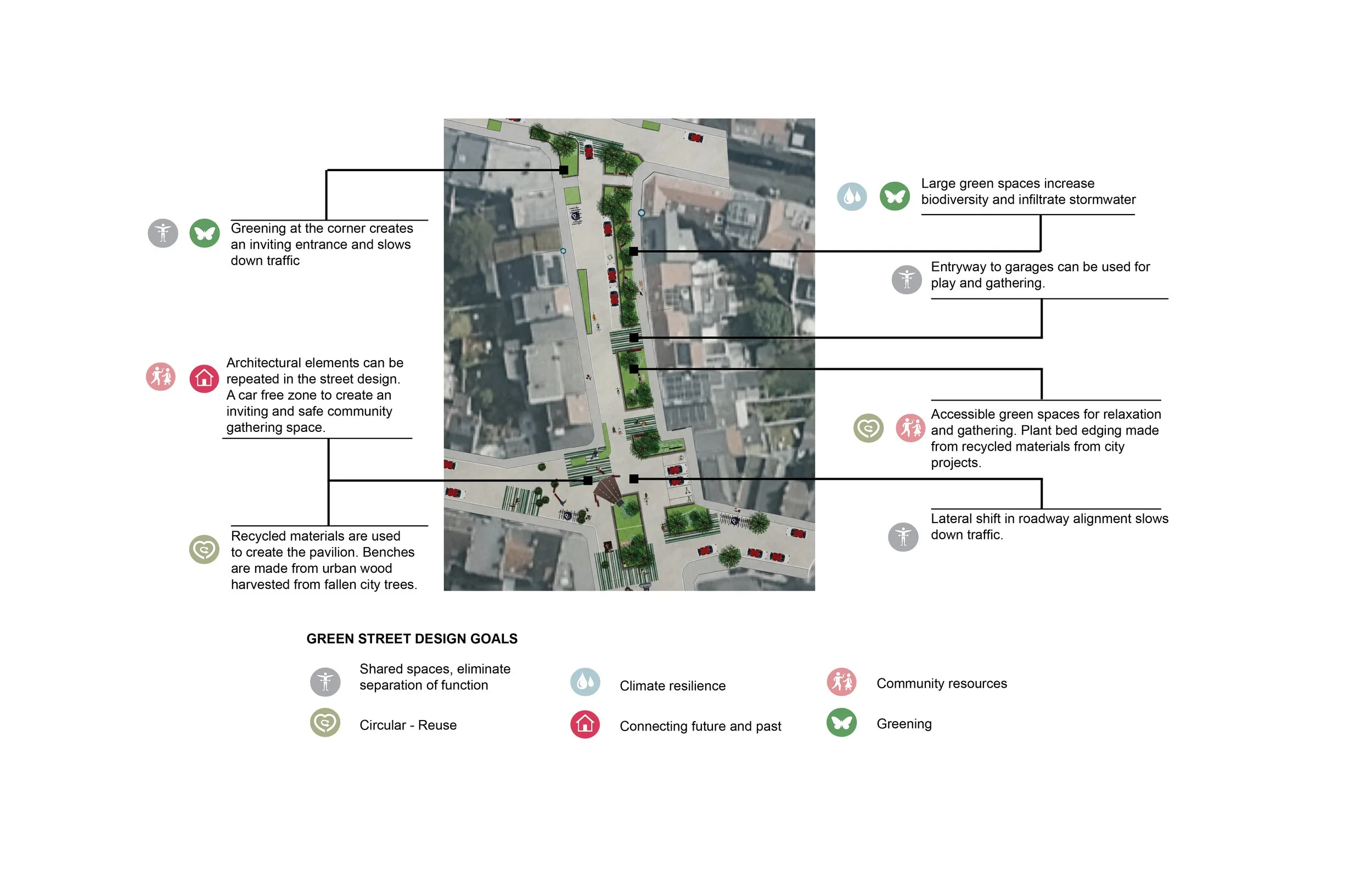
Greening plan
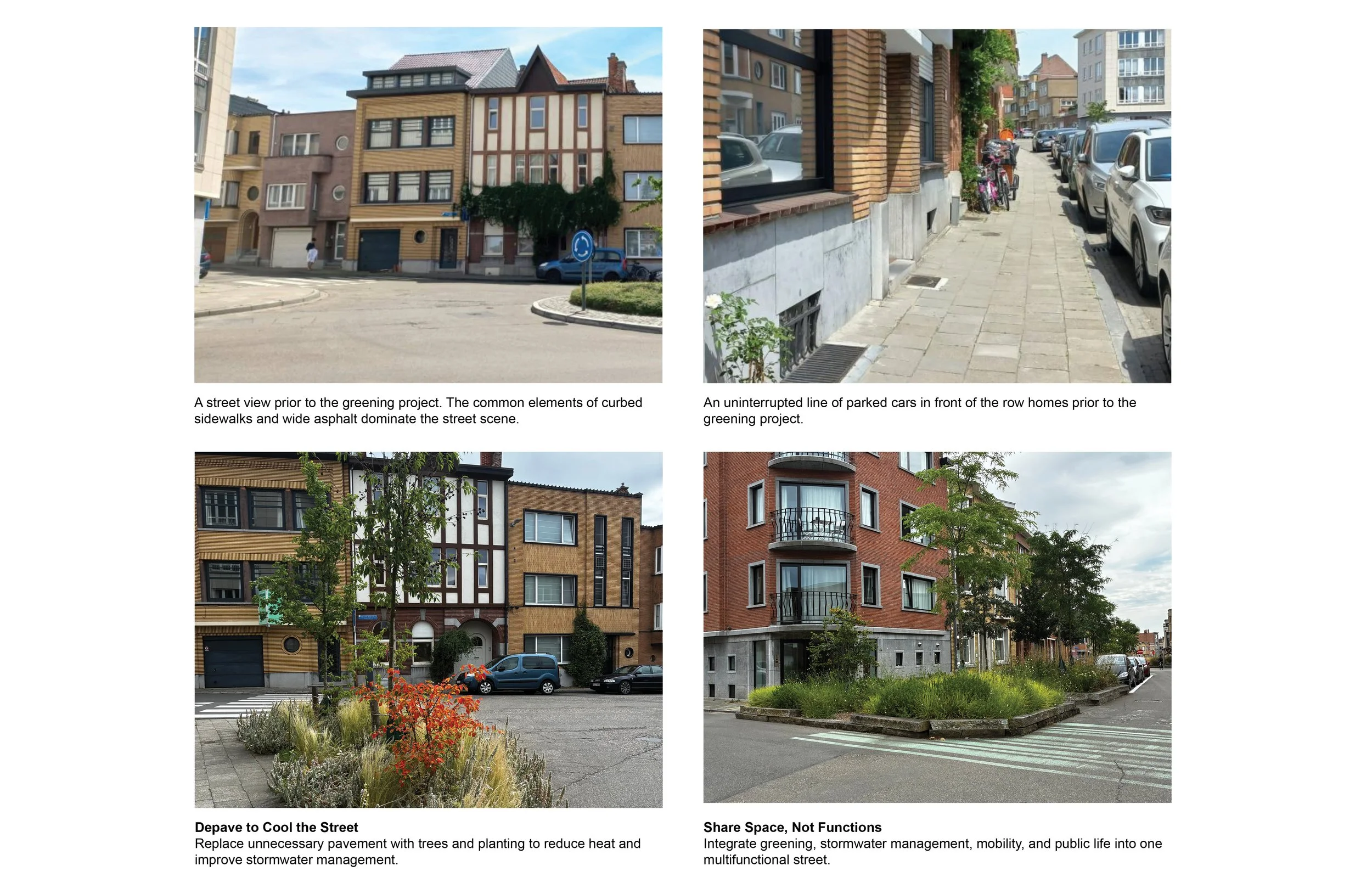
BEFORE
AFTER
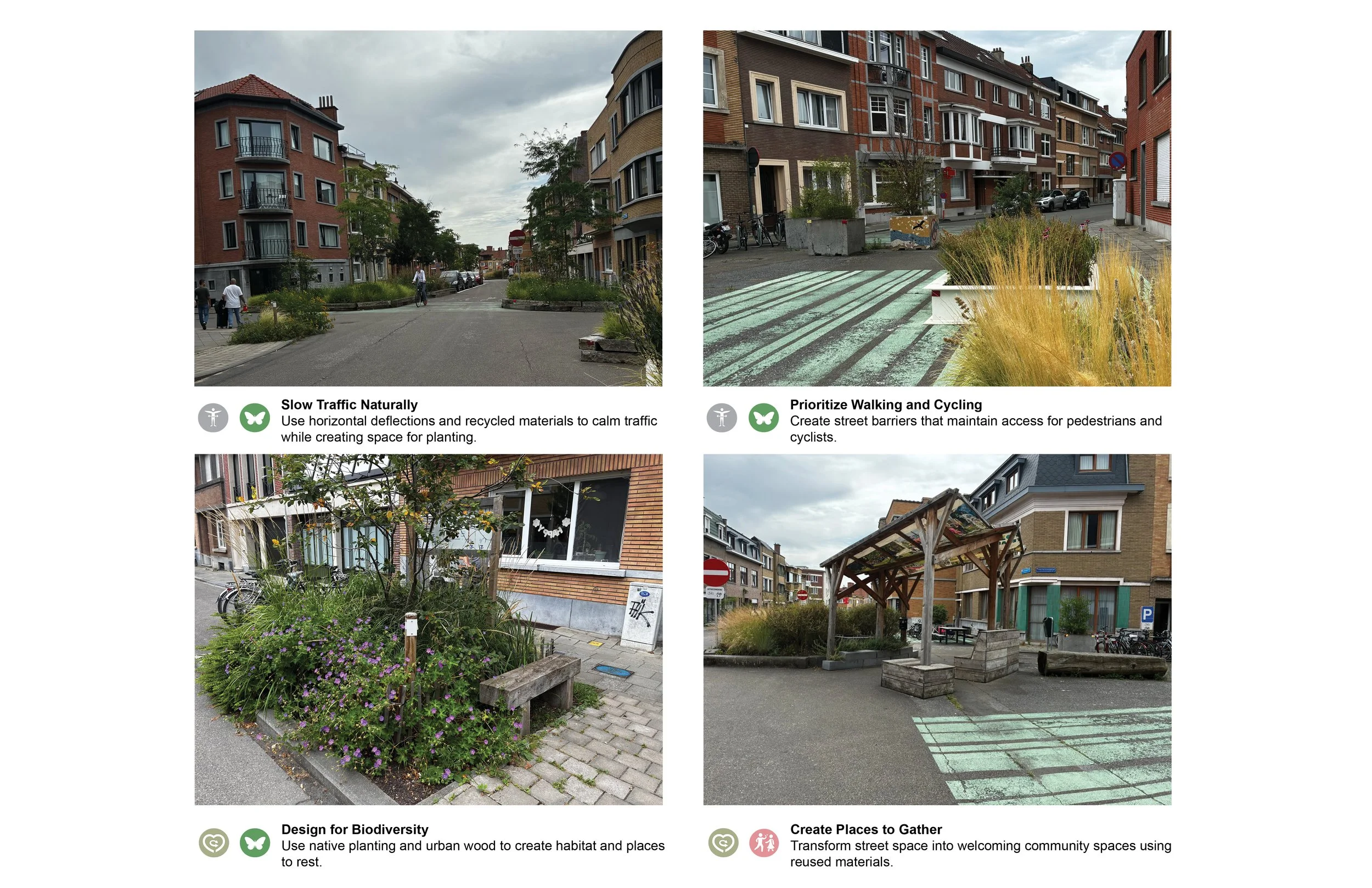
This street greening case study shows how an ordinary residential street can become a more climate-resilient, livable public space by layering multiple design strategies within the same street corridor.
Techniques used include:
Depaving to remove unnecessary asphalt and create space for planting.
Street trees and layered planting to reduce heat and increase biodiversity.
Rain gardens / planted areas to capture and infiltrate stormwater.
Shared-space design to reduce the separation between cars, cyclists, pedestrians, and green space.
Horizontal deflections / chicanes to slow traffic naturally.
Remove curbs to increase shared space for multipurpose use.
Reused materials for planters, benches, and community structures.
Community gathering spaces such as benches and a shade structure.
Accessible green pockets that turn leftover street space into places to pause, meet, and play.