
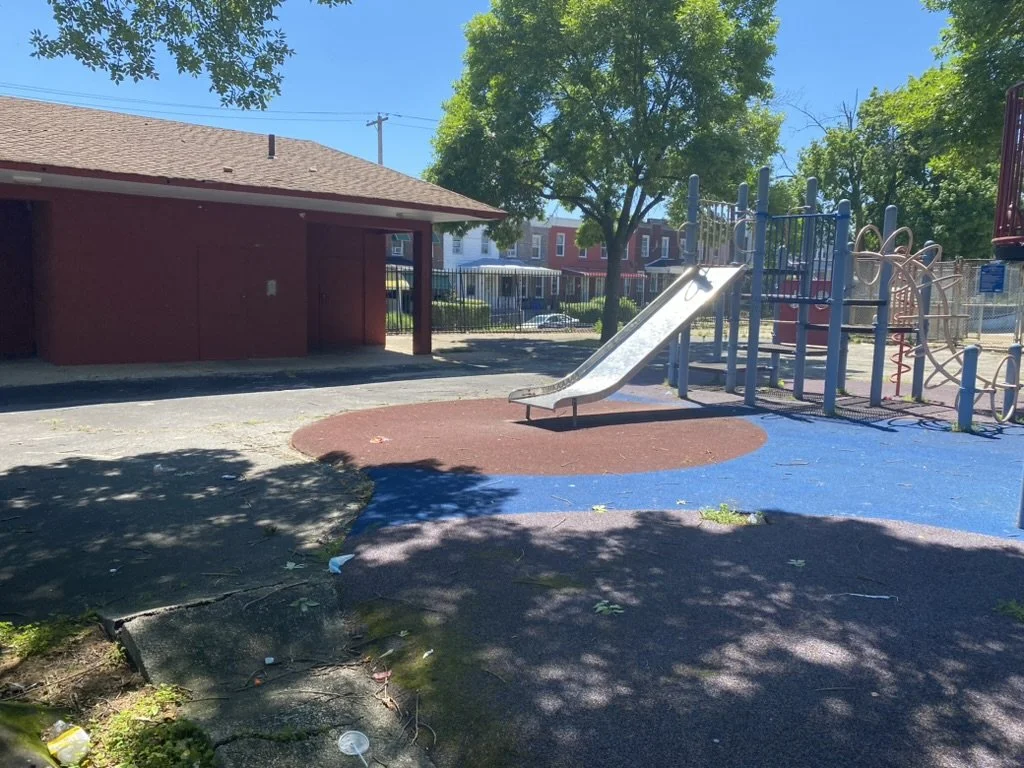
Common playground with poured-in-place rubber surface.
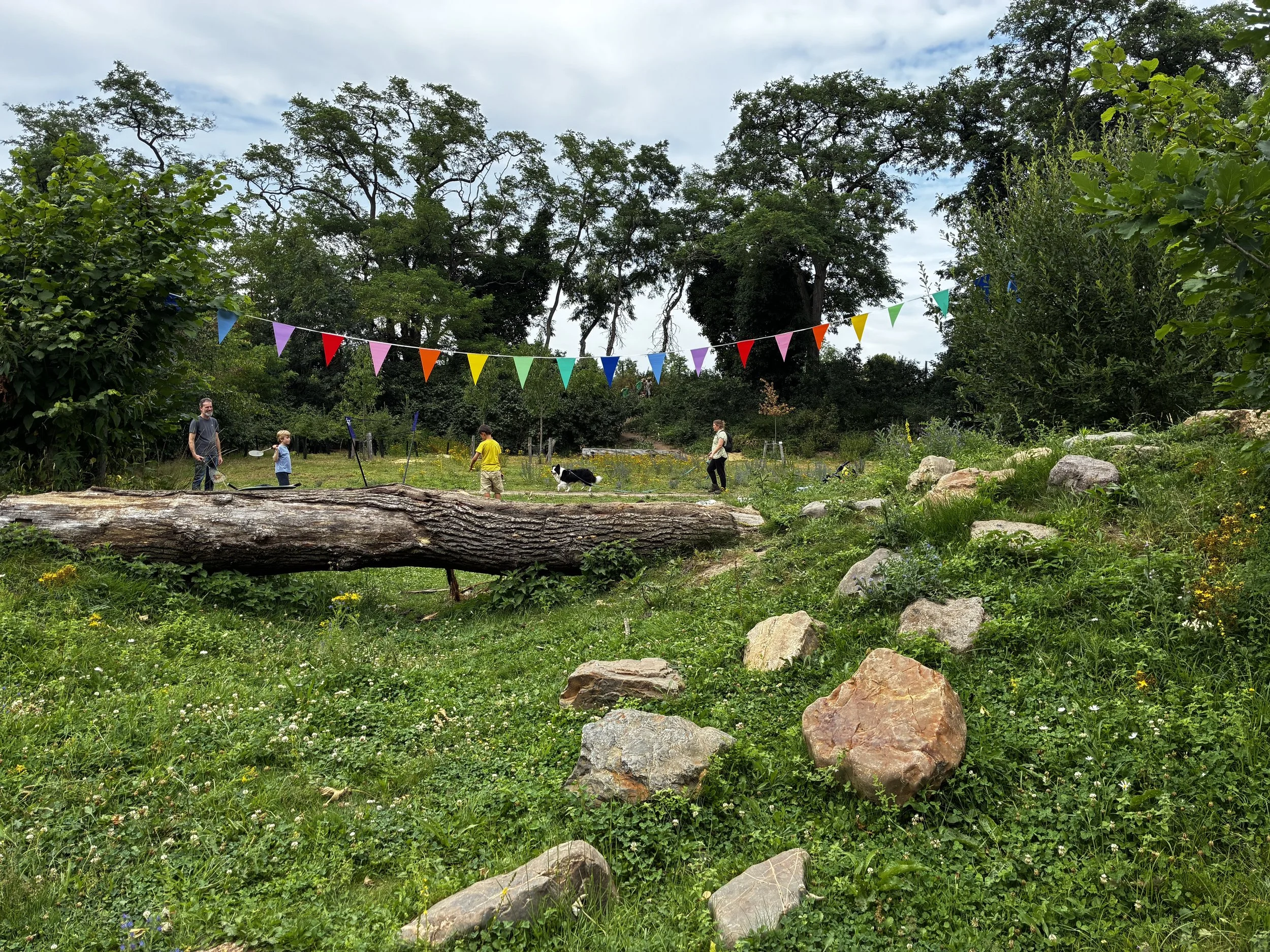
Children’s play area in a natural setting with fallen tree trunks and boulders.
What if Kids Got Dirty Again?
Somewhere along the way, we stopped designing places to play and started designing equipment to use. What if playgrounds weren't covered in poured-in-place rubber, but in sand, gravel, grass, logs, and water?
For decades, playground design has increasingly focused on equipment and standardized safety surfaces. Safety is, of course, essential. But somewhere along the way, many playgrounds became places where the equipment determines how children play, rather than landscapes that invite children to create their own experiences.
The most memorable places are rarely the ones with the most equipment. They are the ones that leave room for imagination. A fallen tree can become a pirate ship, a bridge across a river, a dragon, or a mountain to conquer. A pile of stones becomes a castle. Sand becomes a construction site. Water becomes an experiment. The landscape itself becomes the play. Children don't simply use these places but transform them.
This is one of the greatest strengths of nature-based playgrounds. They encourage open-ended exploration instead of prescribing a single way to play. By climbing logs, balancing on rocks, digging in sand, collecting sticks, discovering insects, and getting muddy, children develop creativity, confidence, problem-solving skills, and a deeper relationship with the natural world. It makes room for nature to become both the teacher and the playground. There is increasing scientific evidence that shows that regular contact with nature supports children's physical activity, creativity, attention, emotional well-being, and environmental stewardship.
During recent visits across Belgium and the Netherlands, I was struck by how common it is to find playgrounds built around sand, logs, planting, water, and landforms. These landscapes feel less like installations and more like extensions of the surrounding environment. In much of North America, playgrounds still rely heavily on manufactured equipment and poured-in-place rubber.
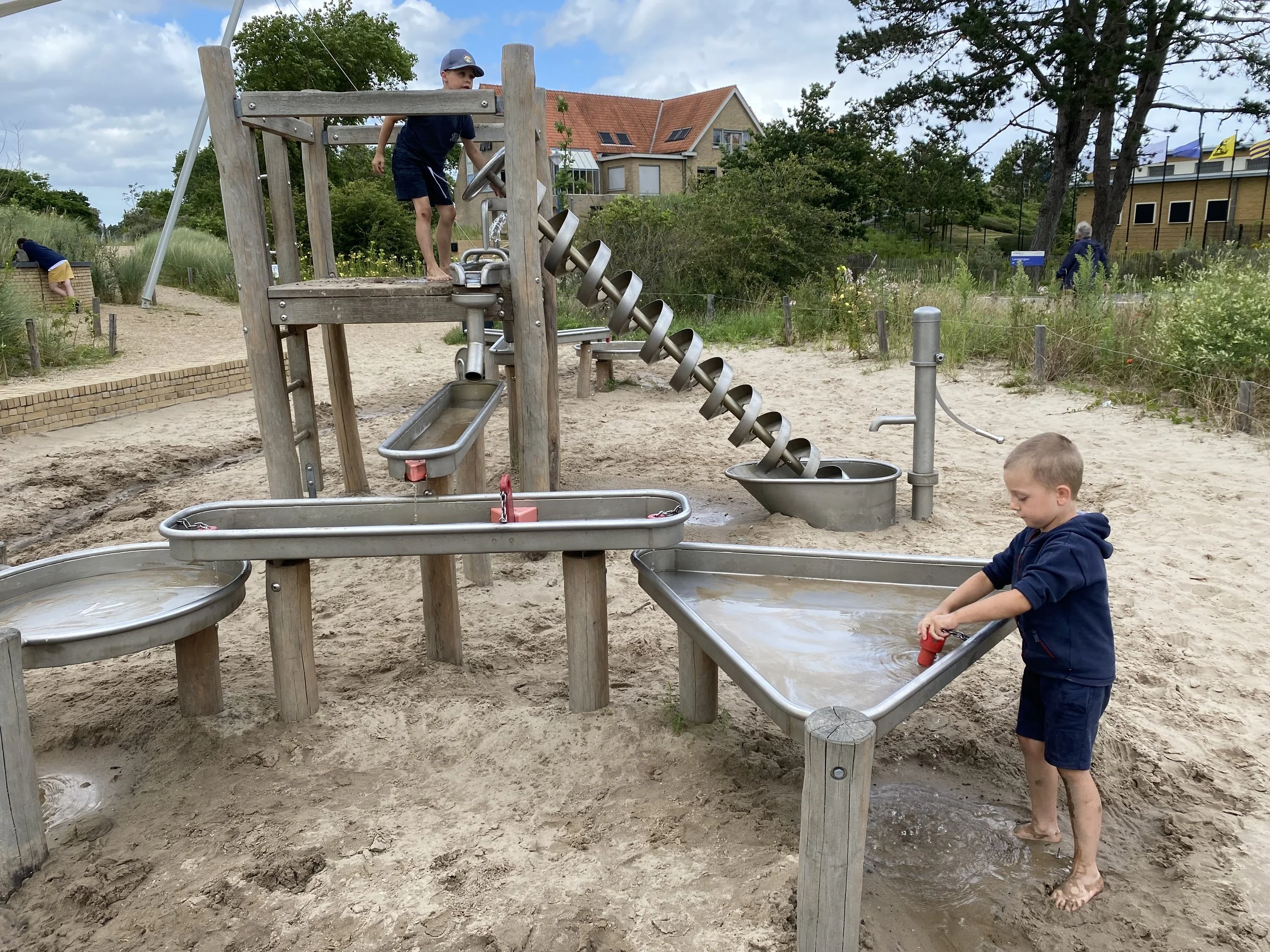
Water play equipment with bare feet in the muddy sand of the surrounding dunes.
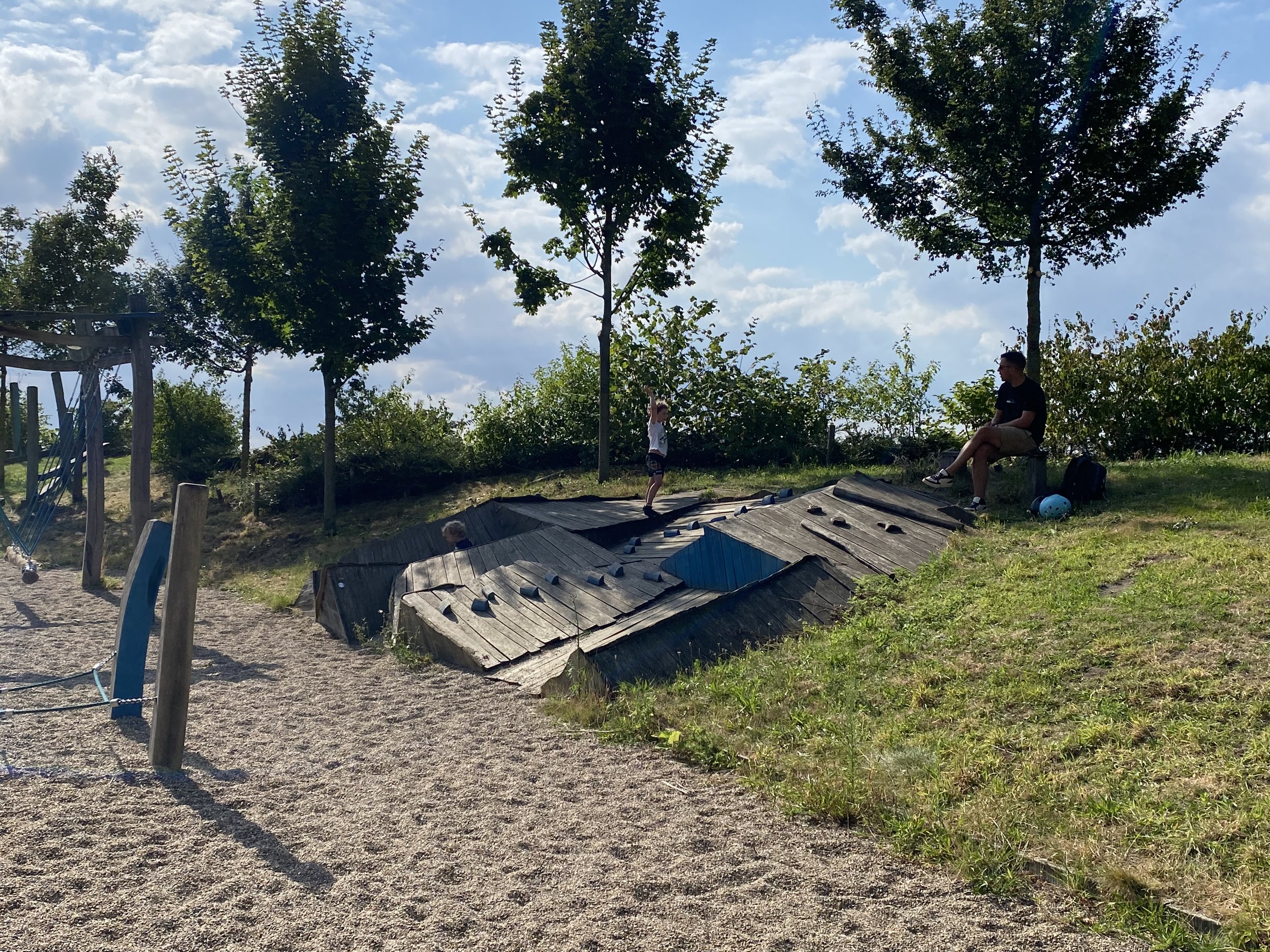
A climbing wall that works with the existing topography.
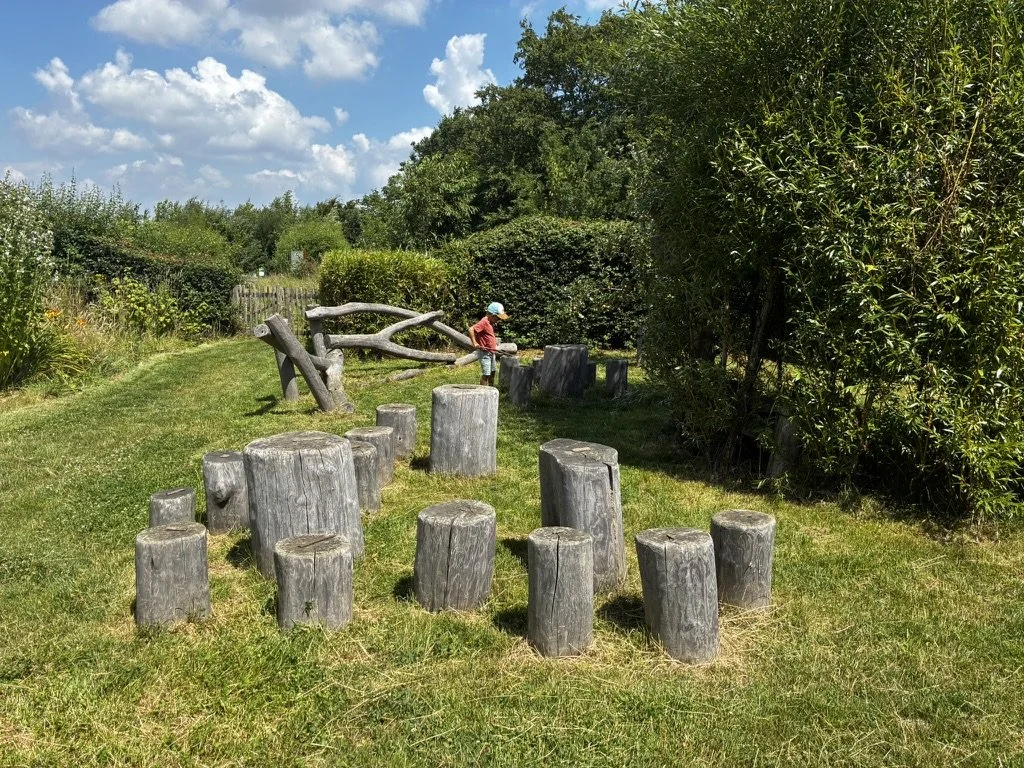
Play equipment made from local materials surrounded by nature.
As landscape architects, we also have an opportunity to rethink the materials we use. Nature-based play doesn't just change how children play, it also changes what we build those places from.
Across North America, playgrounds often rely heavily on poured-in-place rubber surfacing and manufactured equipment. While these materials have their place, particularly where accessibility requirements or specific safety considerations call for them, they also carry a relatively high embodied carbon footprint and can be costly to repair when damaged.
Nature-based playgrounds offer another approach. Sand, gravel, mulch, grass, and natural landforms can provide impact-absorbing surfaces while reducing reliance on manufactured materials. They are often easier to repair, age gracefully, support biodiversity, and integrate seamlessly into the surrounding landscape instead of feeling like objects placed upon it.
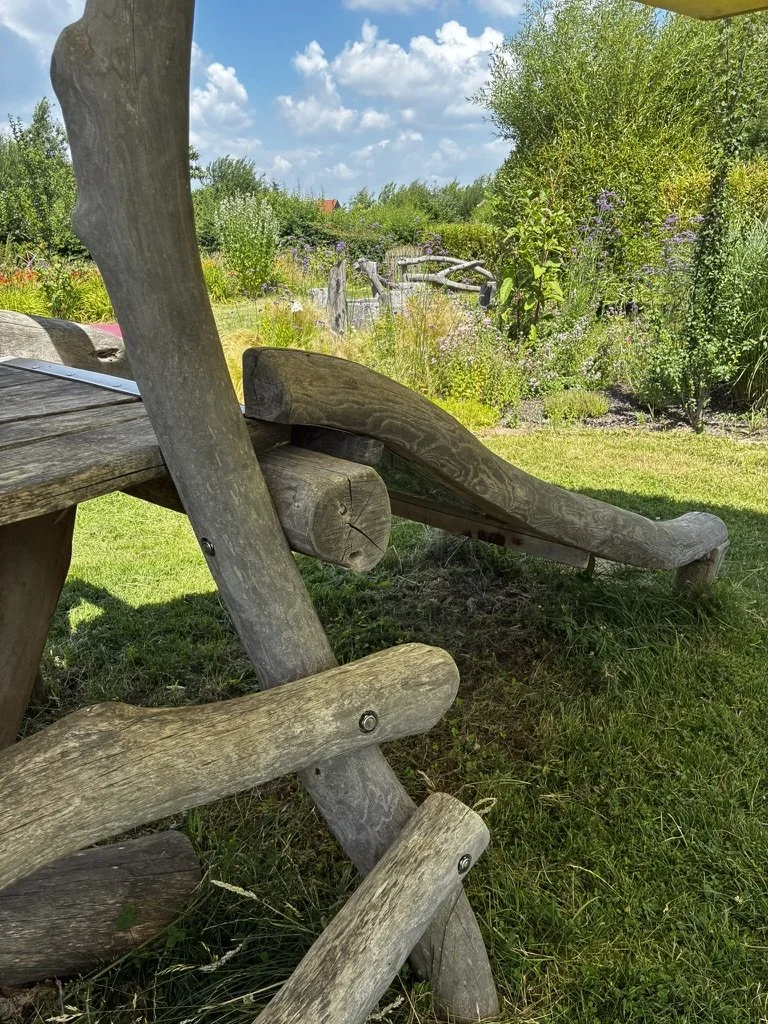
Wooden play elements within a native planting.
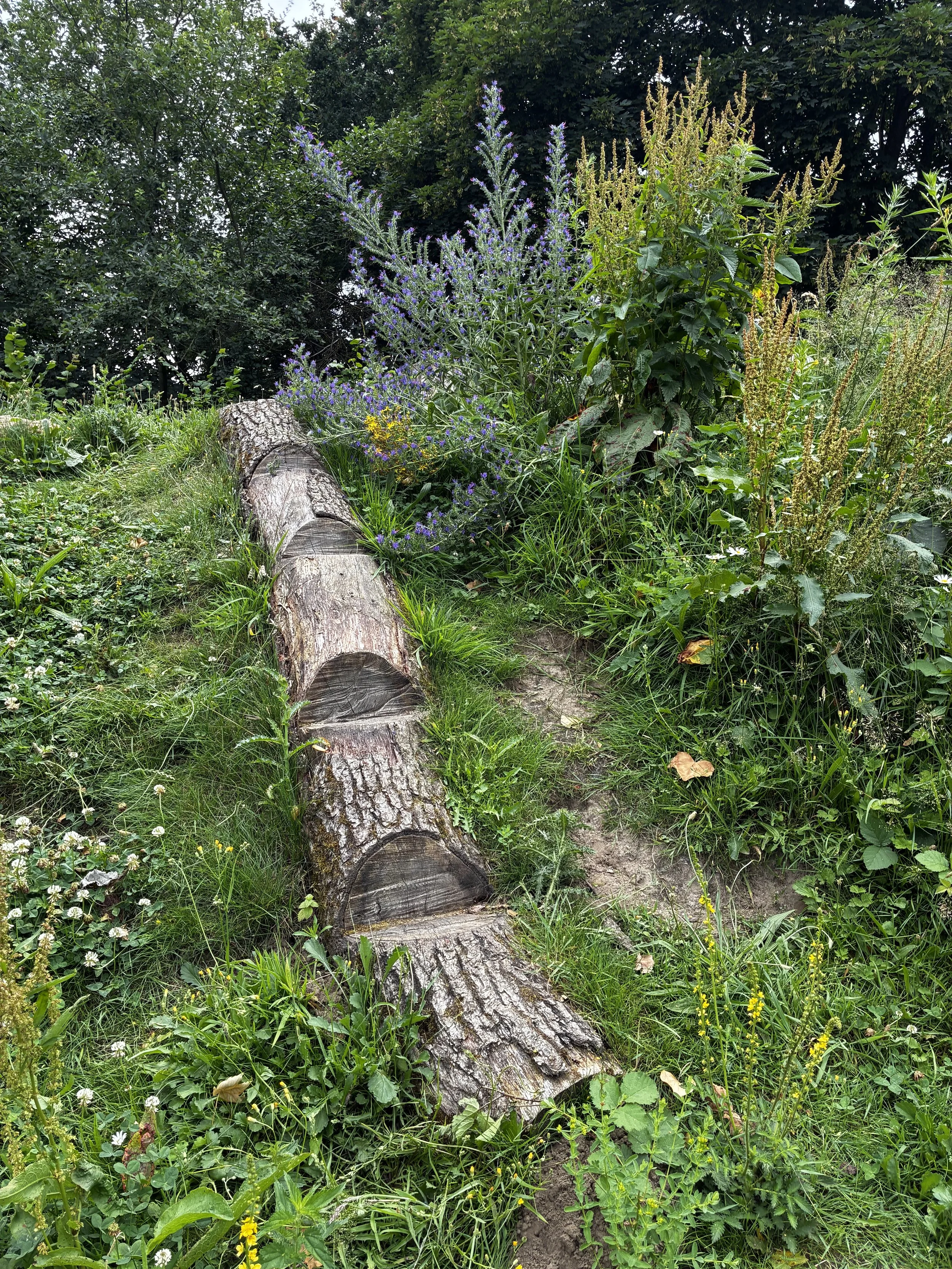
A fallen log becomes both a staircase and a balancing beam.
Perhaps the question is no longer how many pieces of equipment a playground needs.
Perhaps it is:
How can we create landscapes where children are free to imagine?
When we reconnect play with nature, we don't simply build better playgrounds. We nurture healthier children, richer ecosystems, and a stronger relationship between people and the living landscapes that sustain us.
Because perhaps childhood was never meant to happen on rubber.
Perhaps it was always meant to happen in nature.
If we designed playgrounds today from scratch, with children's development, biodiversity, and climate resilience as equal priorities, would we really choose rubber as our default surface?
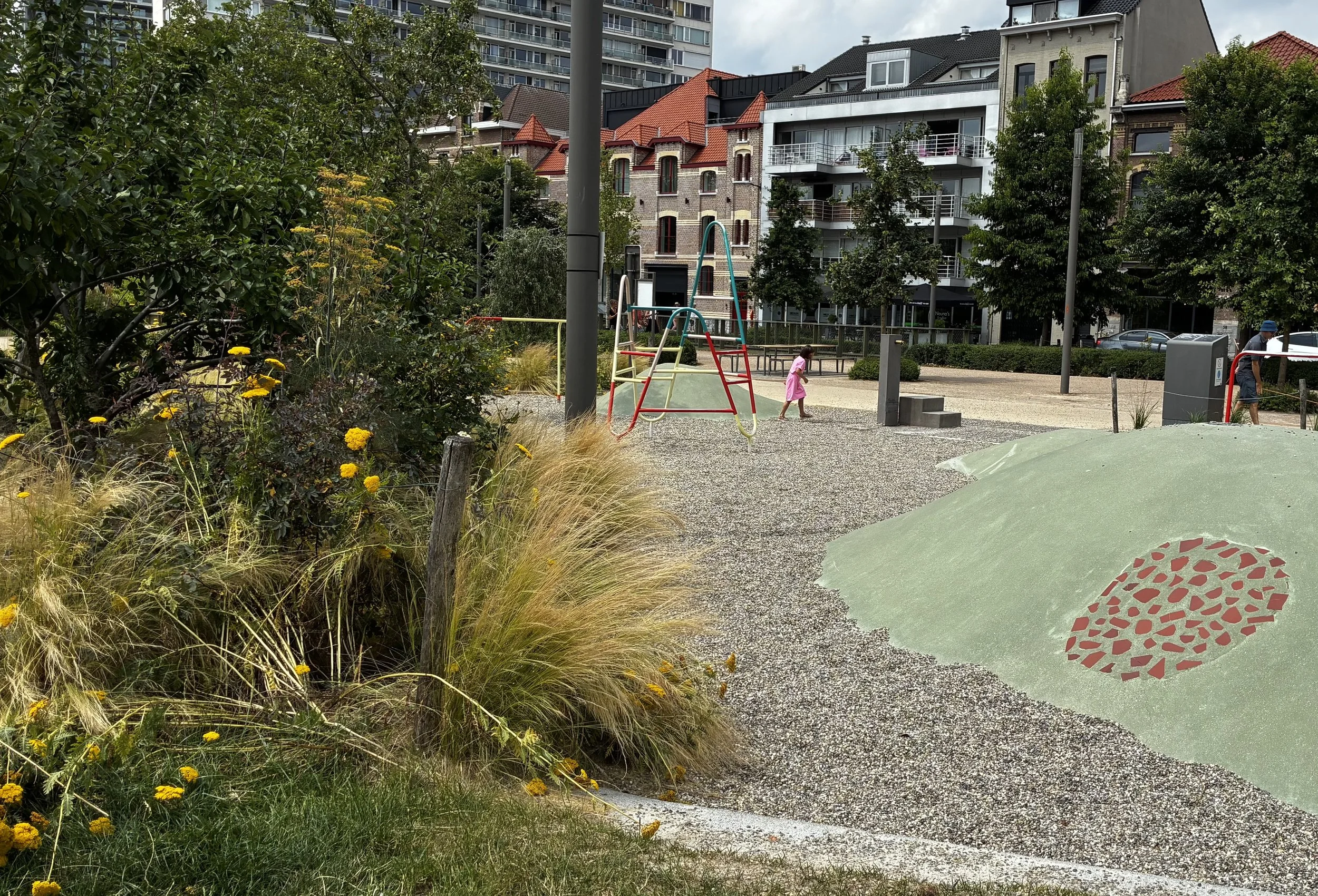
An urban playground with gravel surface surrounded by pollinator gardens.