
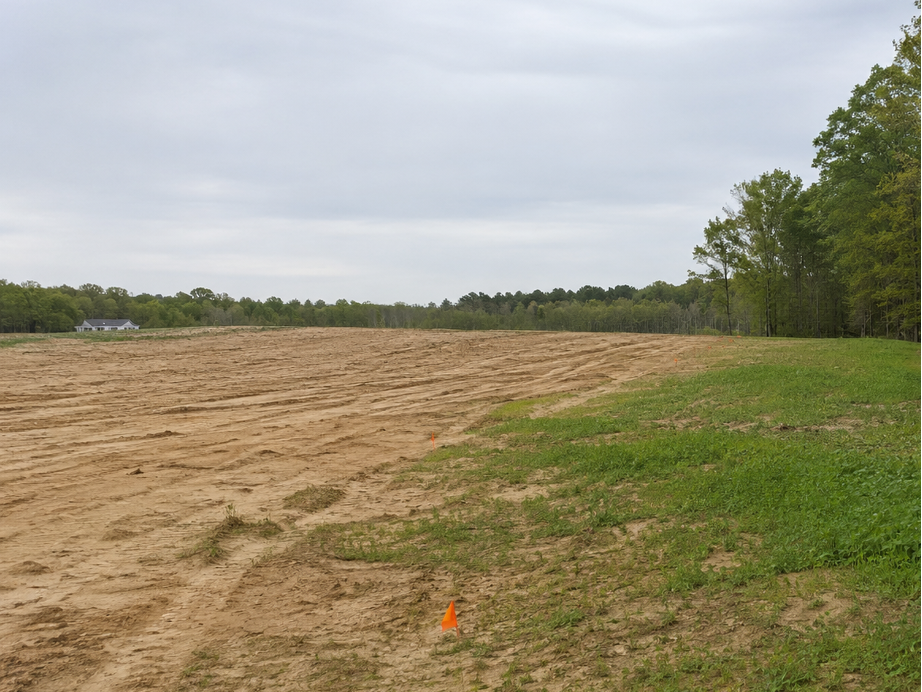
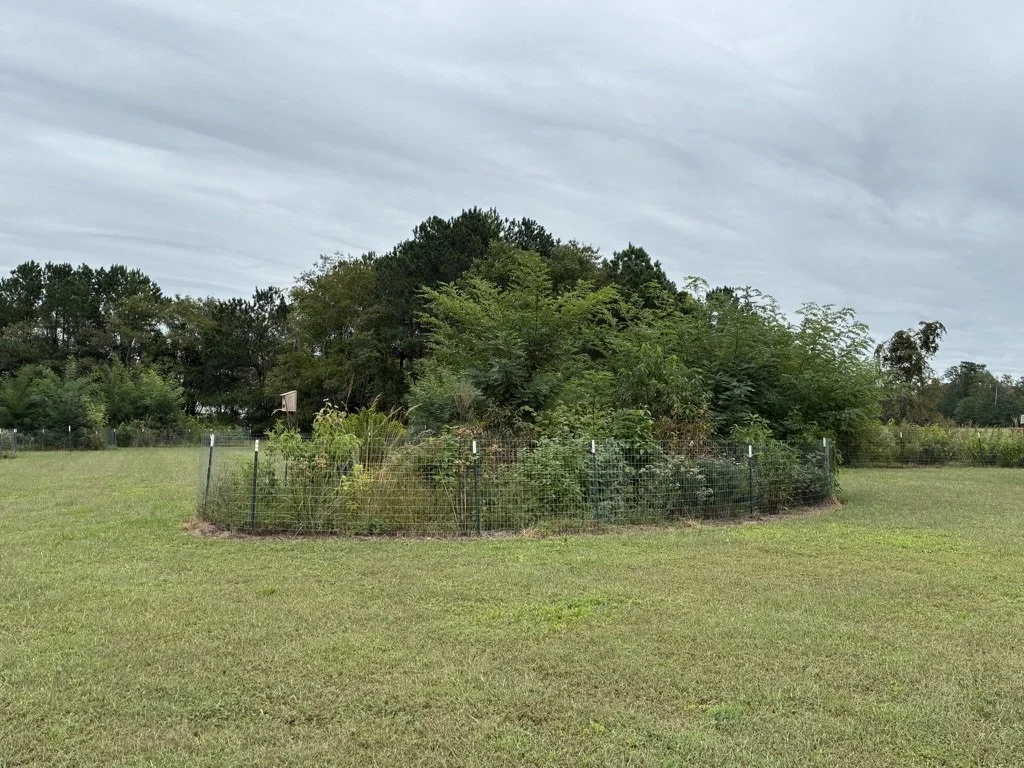
These images illustrate how disturbed land (Top) can be transformed into landscapes that provide habitat, ecological benefits, and opportunities for people (Bottom)
Beyond Turf: Creating Living Landscapes After Disturbance
How meadows, woodlands, and natural regeneration can transform disturbed land into places that provide ecosystem services.
When infrastructure is removed or land is disturbed, the next step often follows a familiar pattern: grade the ground, plant grass, and begin mowing. Stabilizing exposed soil is necessary, but the landscape that follows deserves careful consideration. Could some of that land become meadow? Could woodland return? Where would lawn best support recreation, access, or gathering?
These questions framed Beyond Turf, an October 21 workshop at the Delaware Center for the Inland Bays that explored opportunities for ecological recovery on disturbed land. Through mapping, design examples, restoration strategies, and group exercises, participants considered how properties can support a richer mix of habitats while continuing to serve the people who use them.
The approach reflects a central idea behind RE-NATU-RING: landscape design can help restore natural processes while connecting people with the living systems around them.
Begin by reading the landscape
Every restoration project starts with understanding what is already there. Construction, grading, and infrastructure removal can leave compacted soils, altered drainage, and reduced vegetation. Yet ecological assets may remain: mature trees, native shrubs, intact soils, wetlands, or young seedlings establishing along a forest edge.
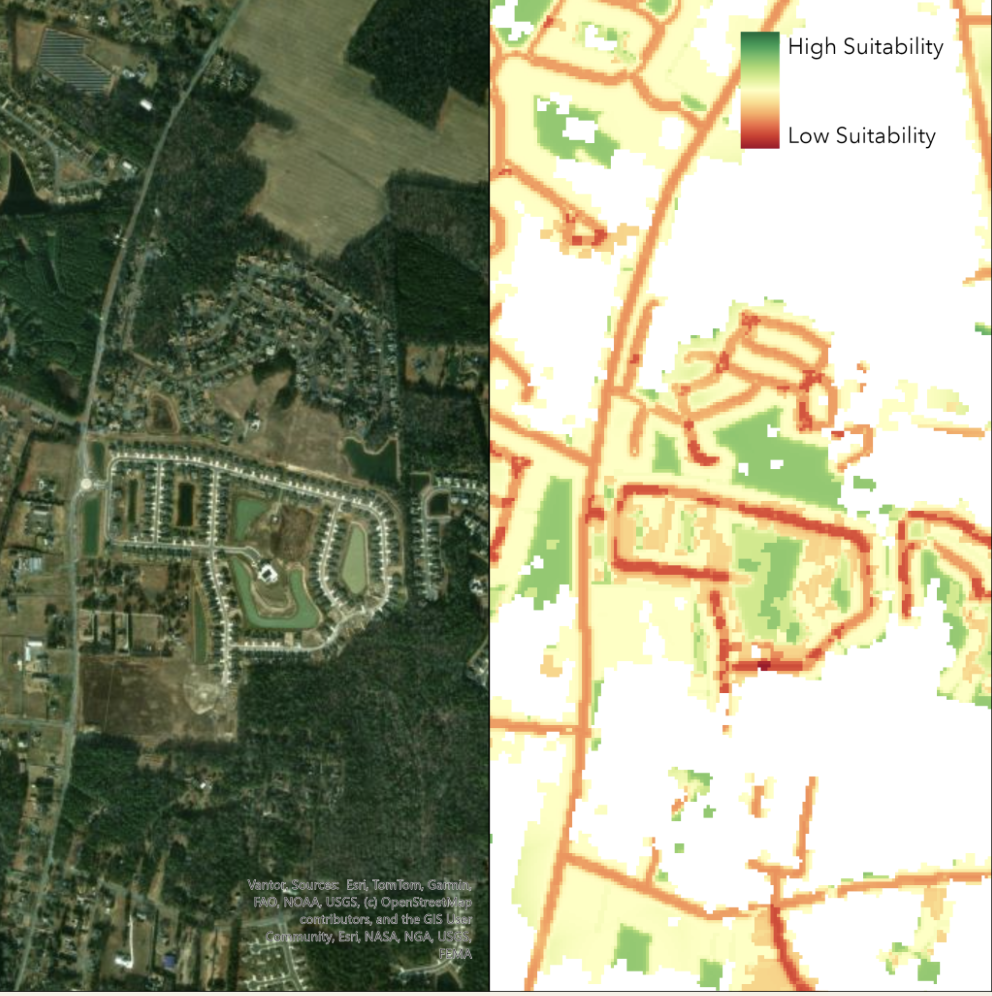
The Center for the Inland Bays uses ArcGIS to identify areas that may offer opportunities for restoration. Field assessment helps determine their suitability.
GIS mapping can help identify promising restoration sites and reveal connections to surrounding habitats. Field observations then bring that larger picture into focus. Where does water collect? Which areas receive full sun? Are invasive plants becoming established? Is nearby woodland supplying native seed? How do people move through and use the property?
These observations guide decisions about what to protect, where to intervene, and where natural recovery may need only modest assistance.
Design a mosaic of landscape types
A thoughtful concept plan can combine lawn, meadow, woodland, and areas of natural regeneration according to site conditions and community needs. Lawn remains useful for gathering, play, paths, and places where visibility matters. Sunny areas may offer opportunities for native meadows. Existing woodland edges can provide a starting point for expanding canopy and strengthening habitat connections.
This landscape mosaic also helps direct resources. Some areas may need intensive preparation and planting, while others benefit more from protecting existing vegetation or controlling invasive species. The goal is to match each strategy to the land’s ecological potential and the capacity to care for it.
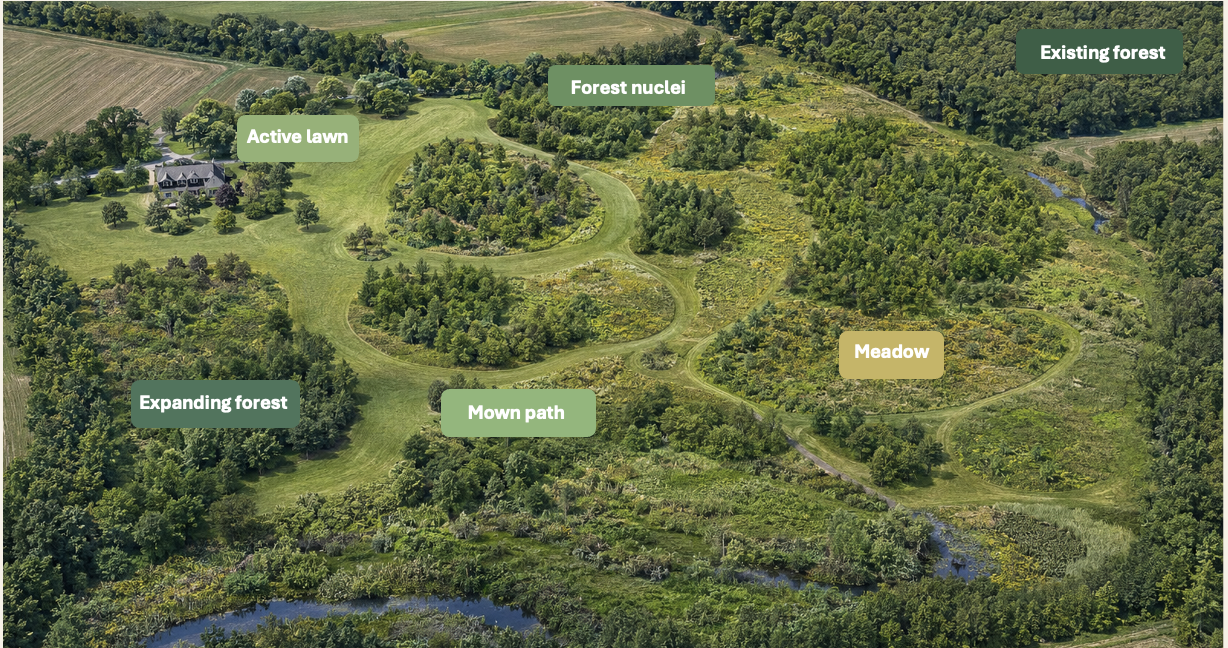
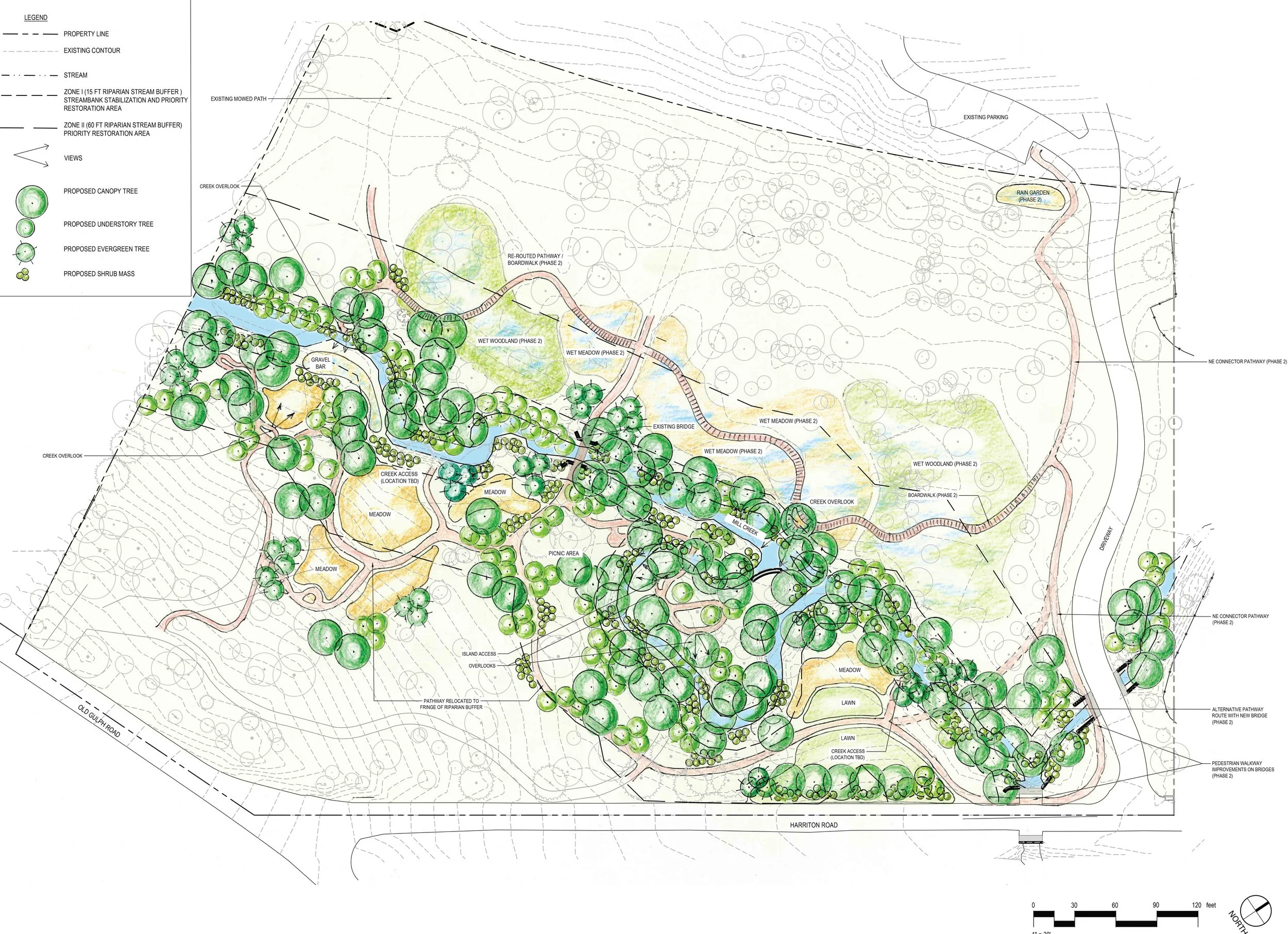
Conceptual rendering of a proposed mosaic landscape with limited zones of turf grass, meadows and woodlands.
Support the return of woodland
Restoring woodland means developing a community of canopy trees, understory trees, shrubs, ground vegetation, leaf litter, and living soil.
Several approaches can support this process. Traditional reforestation distributes trees across a planting area. Applied nucleation concentrates trees and shrubs in strategically located clusters, creating starting points from which woodland can develop. Assisted natural regeneration supports seedlings and saplings already present through protection, invasive plant control, deer management, and selective supplemental planting.
The right approach depends on existing conditions, available resources, and the desired landscape.
Plant selection should begin with an appropriate reference community: a woodland with similar soils, moisture, and environmental conditions. Native status is one consideration; ecological role, future climate suitability, growth behavior, and plant availability also matter. Working with growers early helps translate ecological goals into a feasible planting plan.
The Concept Plan for Harriton Preserve prepared for Lower Merion Conservancy. A collaboration between Gray Landscape Design and Land+
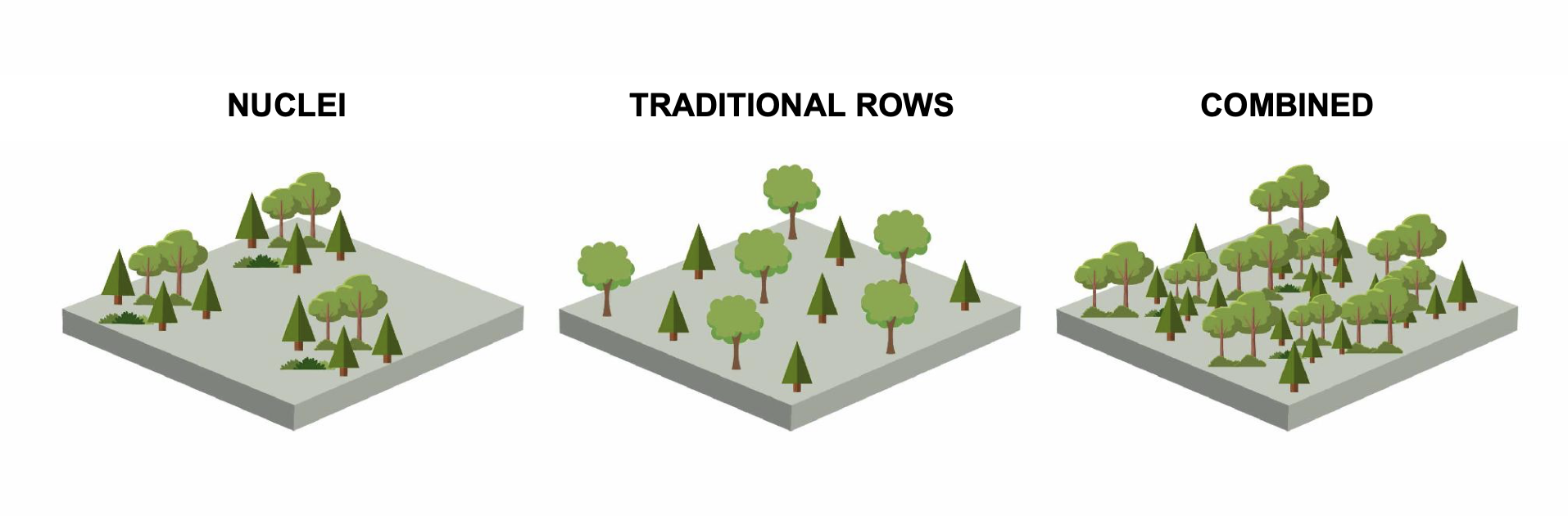
Diagrammatic representation of reforestation techniques.
Consider long-term benefits
Landscape decisions influence what a property contributes over decades. Reducing regularly mown acreage can lower recurring fuel and equipment use. Growing trees and shrubs store carbon, canopy and leaf litter help slow rainfall, while roots and healthy soils support infiltration.
A modeled comparison for the Oak Crest drainfield restoration demonstrated how a combination of meadow, forest nuclei, and retained lawn could produce carbon neutrality after 6 years while the mowed turf grass does not ever reach carbon neutrality because of its continued need for mowing without increasing ecological benefit over time. These projections depend on assumptions about establishment, growth, and management, but they help make the consequences of design choices visible.
Measure recovery over time
Success extends beyond counting surviving plants. Is native vegetation becoming established? Is canopy expanding? Are leaf litter and multiple vegetation layers developing? Is invasive dominance declining?
Monitoring these changes allows management to respond to the landscape as it evolves.
Moving beyond turf begins with seeing more possibilities in the land. By understanding a site, protecting its remaining assets, and planning for sustained care, communities can create landscapes that support ecological recovery while remaining useful, accessible, and meaningful to people.
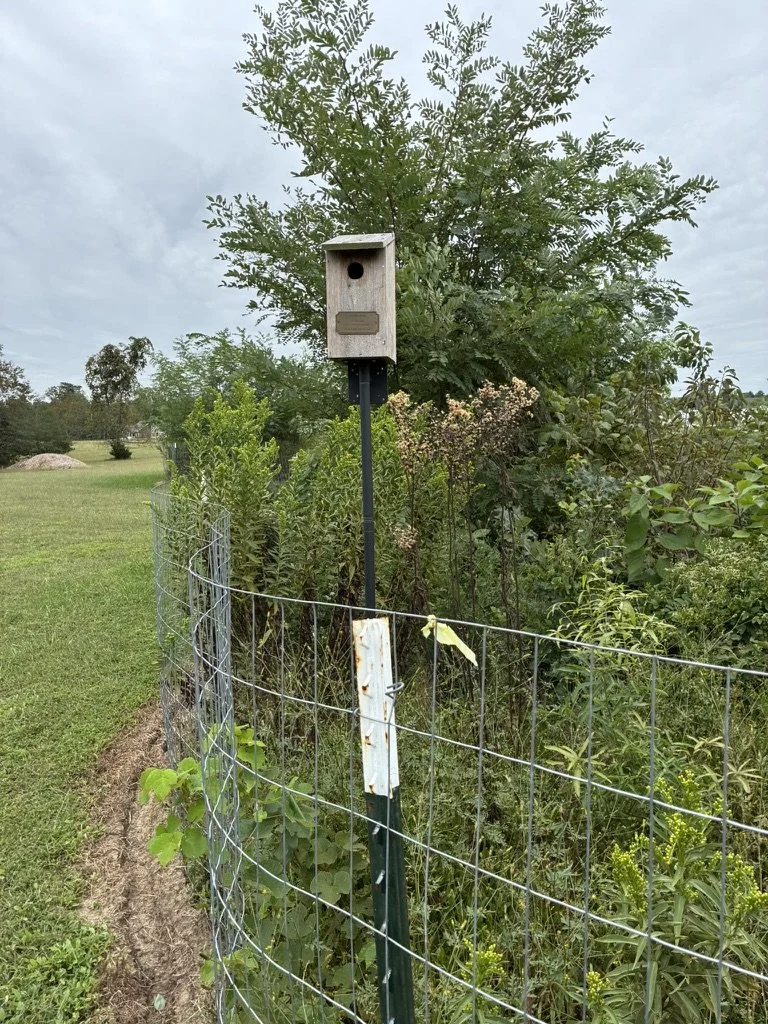
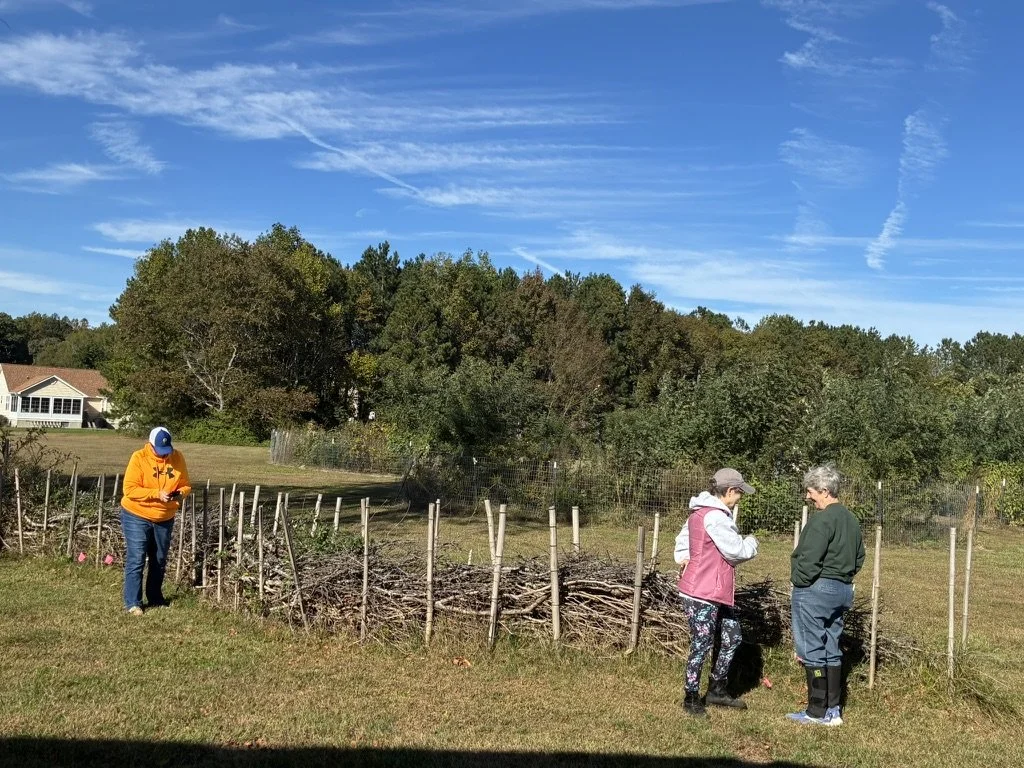
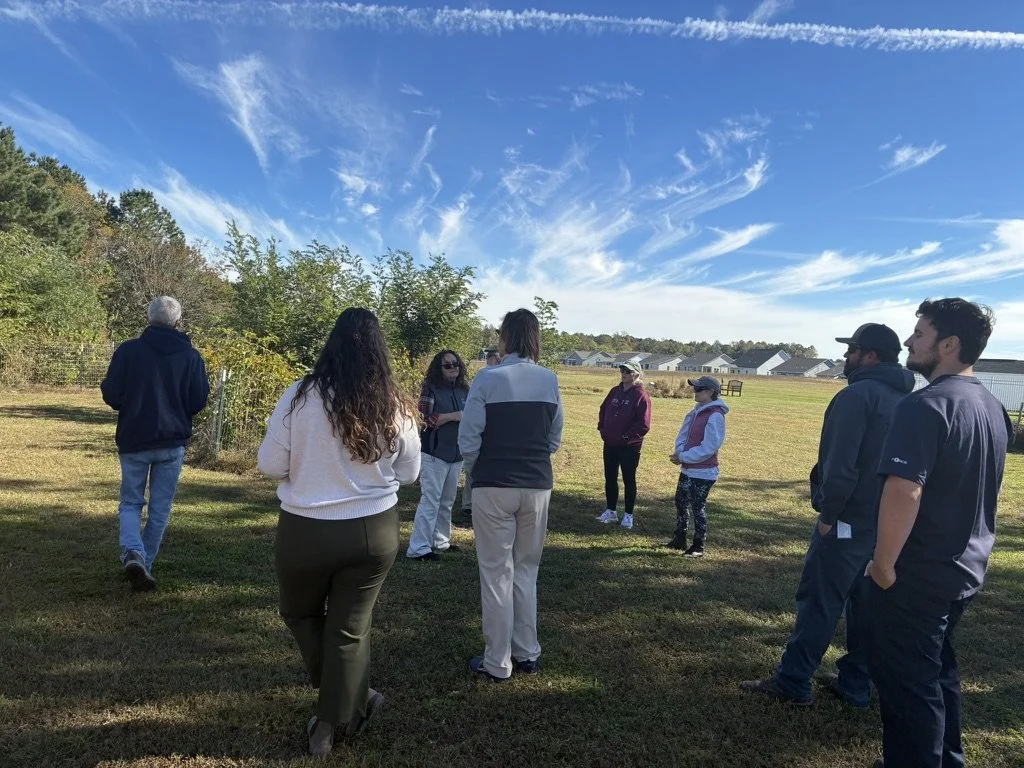
Oak Crest residents are active stewards of the landscape. They gather regularly to watch birds around the mini-forests and connect with one another.
Design for people and stewardship
Ecological recovery is more likely to succeed when the people who use and maintain a property understand its purpose.
Residents, landowners, and maintenance teams should be involved early. Paths, maintained edges, signs, and demonstration areas can make a changing landscape welcoming and legible. Showing what to expect in the first year and several years later helps build realistic expectations.
A practical stewardship plan identifies who will manage the site, how invasive plants and deer browsing will be addressed, and what resources are available for establishment and long-term care. These responsibilities belong in the planning process from the beginning.
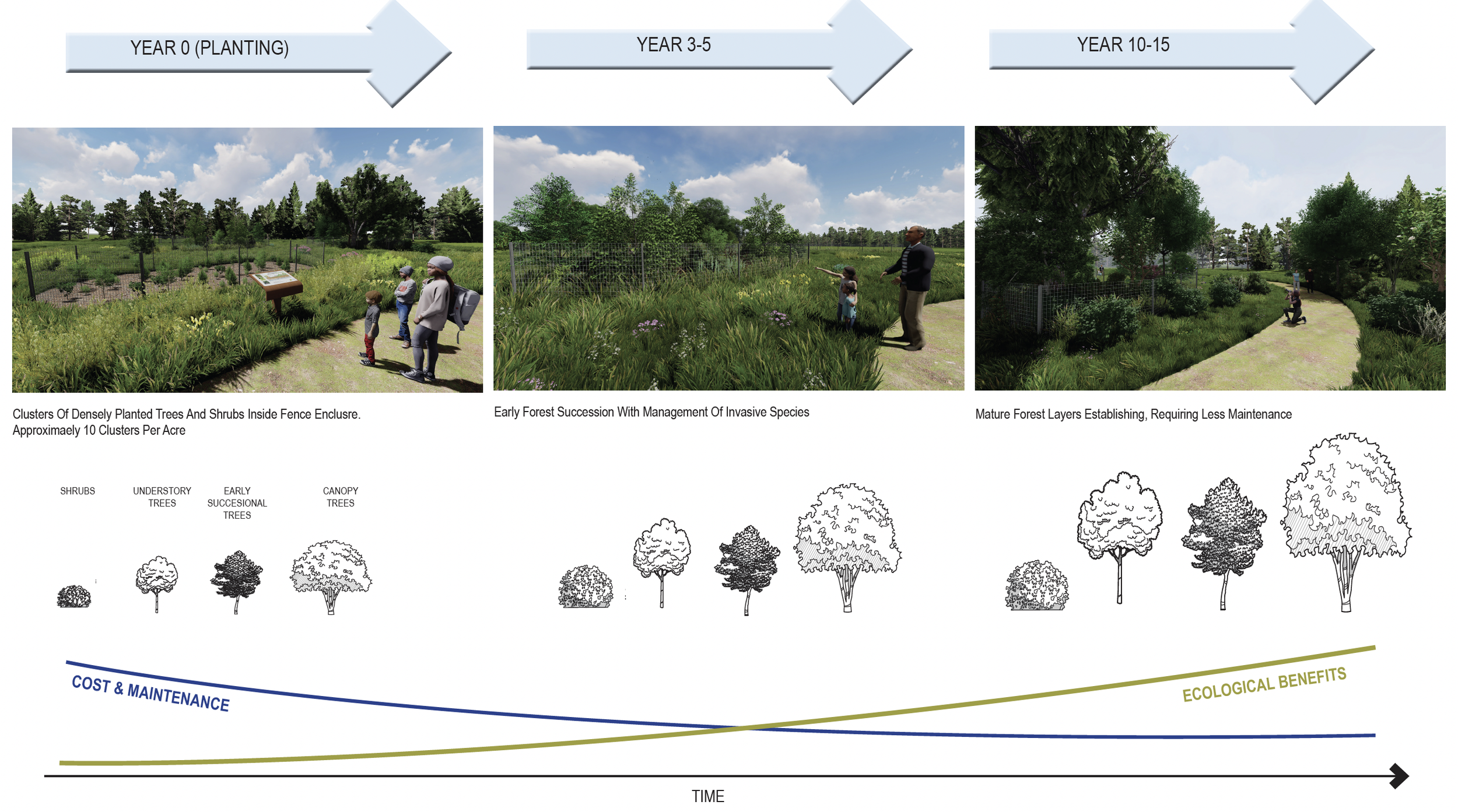
Restoration trajectories vary by site. Maintenance needs change over time. Overall cost and maintenance decrease over time while the ecological benefits increase as the forest matures.
Meghan Noe Fellows from the Delaware Center for the Inland Bays talking to the workshop participants about the mini-forest at Oak Crest.