
RE-NATU-RING a Neighborhood Street
A case study of Constantin Meunierstraat in Leuven, Belgium.
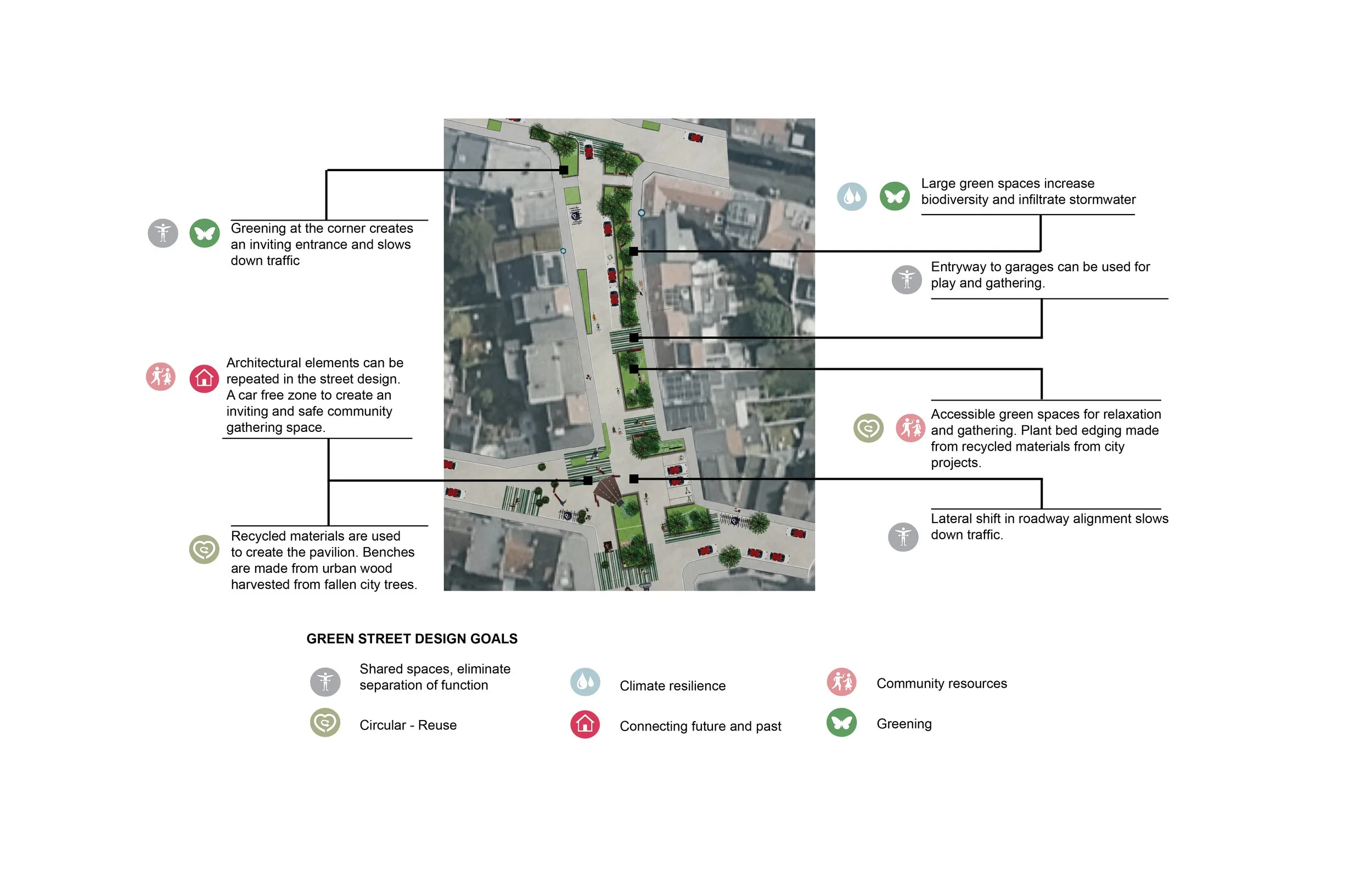
This case study explores how a conventional residential street was reimagined through de-paving, shared space, biodiversity, and community participation to create a healthier place for people and nature.
Greening plan
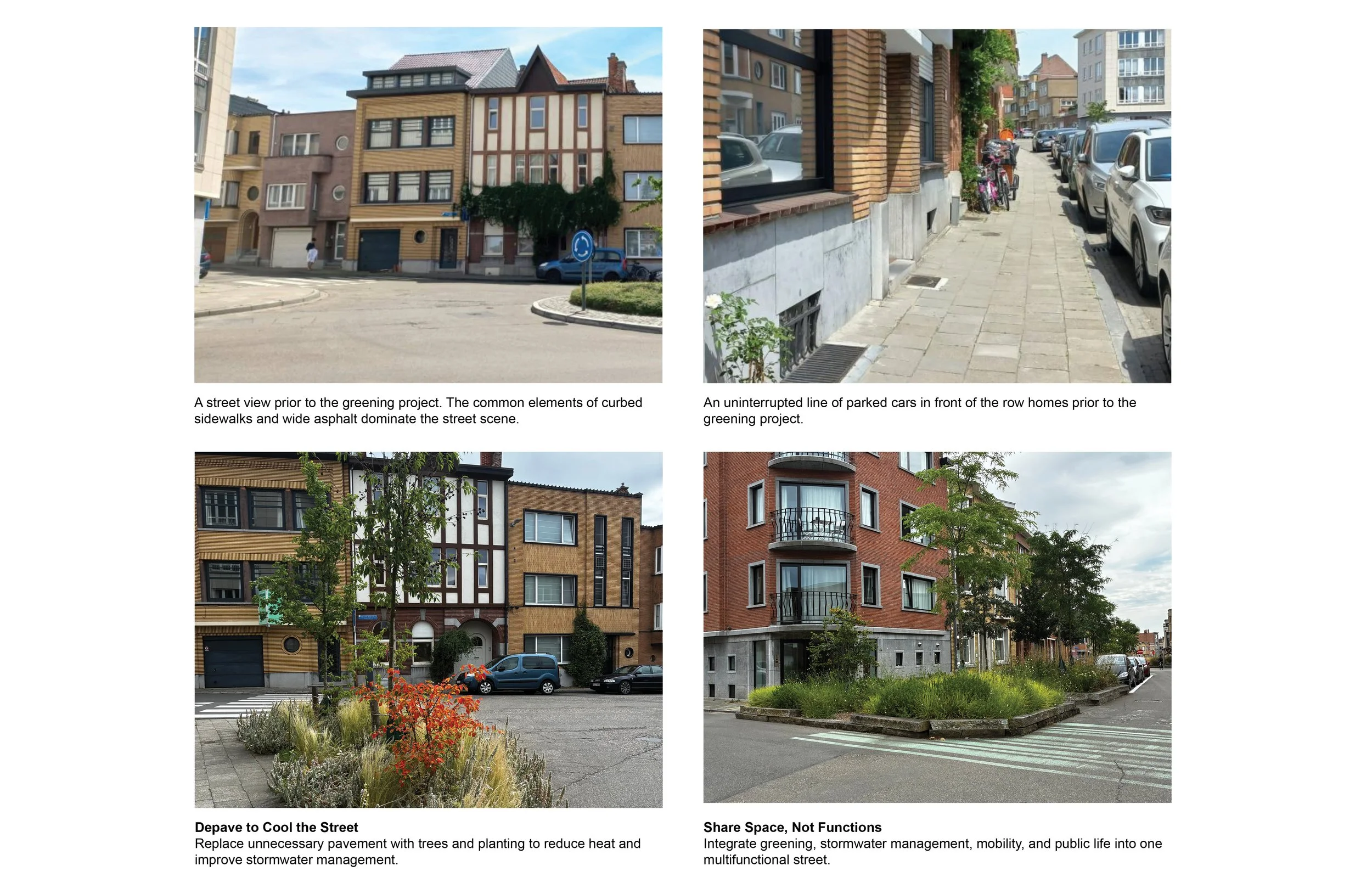
BEFORE
AFTER
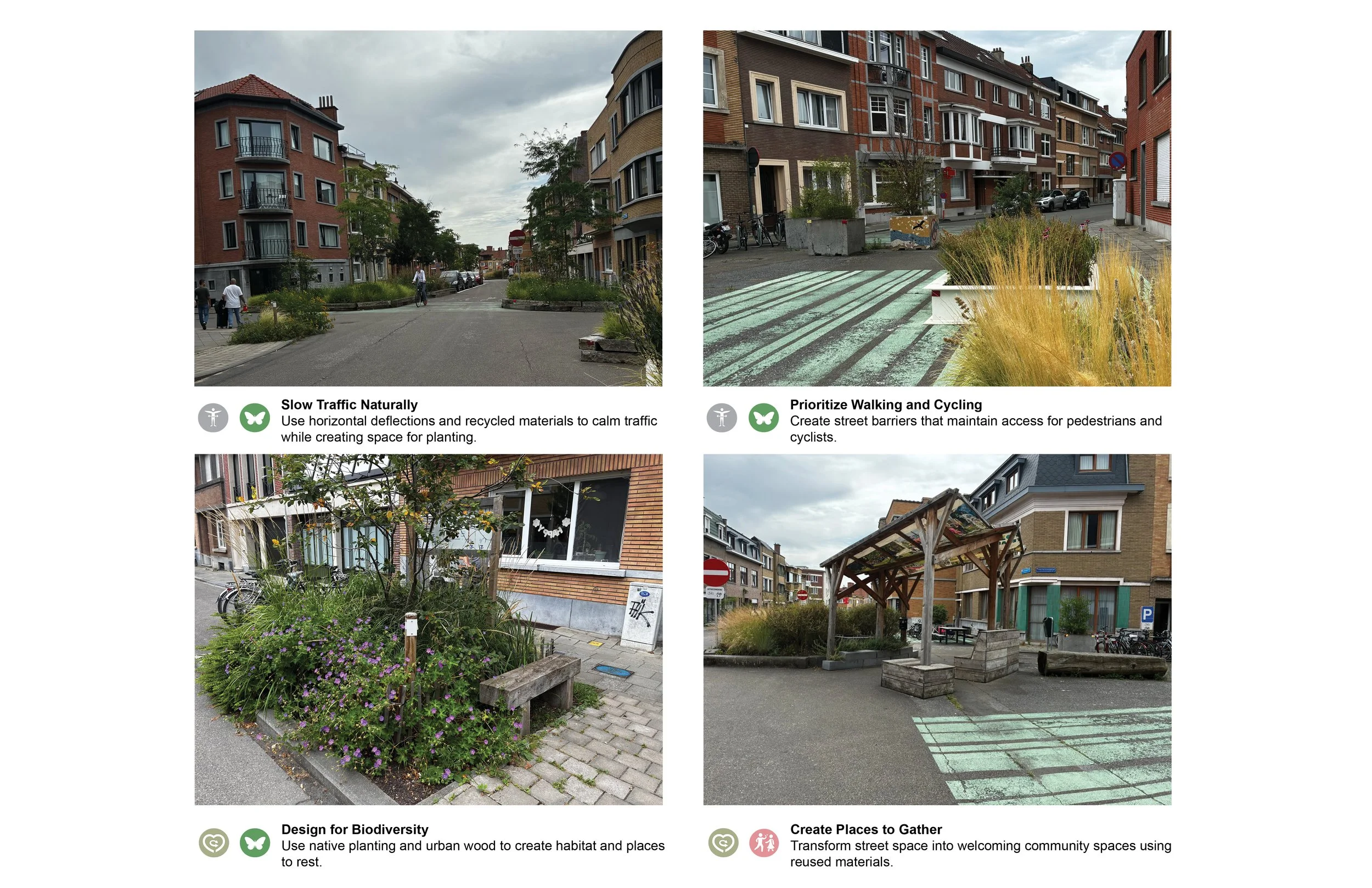
This street greening case study shows how an ordinary residential street can become a more climate-resilient, livable public space by layering multiple design strategies within the same street corridor.
Techniques used include:
Depaving to remove unnecessary asphalt and create space for planting.
Street trees and layered planting to reduce heat and increase biodiversity.
Rain gardens / planted areas to capture and infiltrate stormwater.
Shared-space design to reduce the separation between cars, cyclists, pedestrians, and green space.
Horizontal deflections / chicanes to slow traffic naturally.
Remove curbs to increase shared space for multipurpose use.
Reused materials for planters, benches, and community structures.
Community gathering spaces such as benches and a shade structure.
Accessible green pockets that turn leftover street space into places to pause, meet, and play.
Benefits
Reduced urban heat
Stormwater captured where it falls
More habitat for birds and pollinators
Slower vehicle speeds
Safer walking and cycling
Better neighborhood identity
More opportunities for social interaction
Lower long-term maintenance than conventional streets