
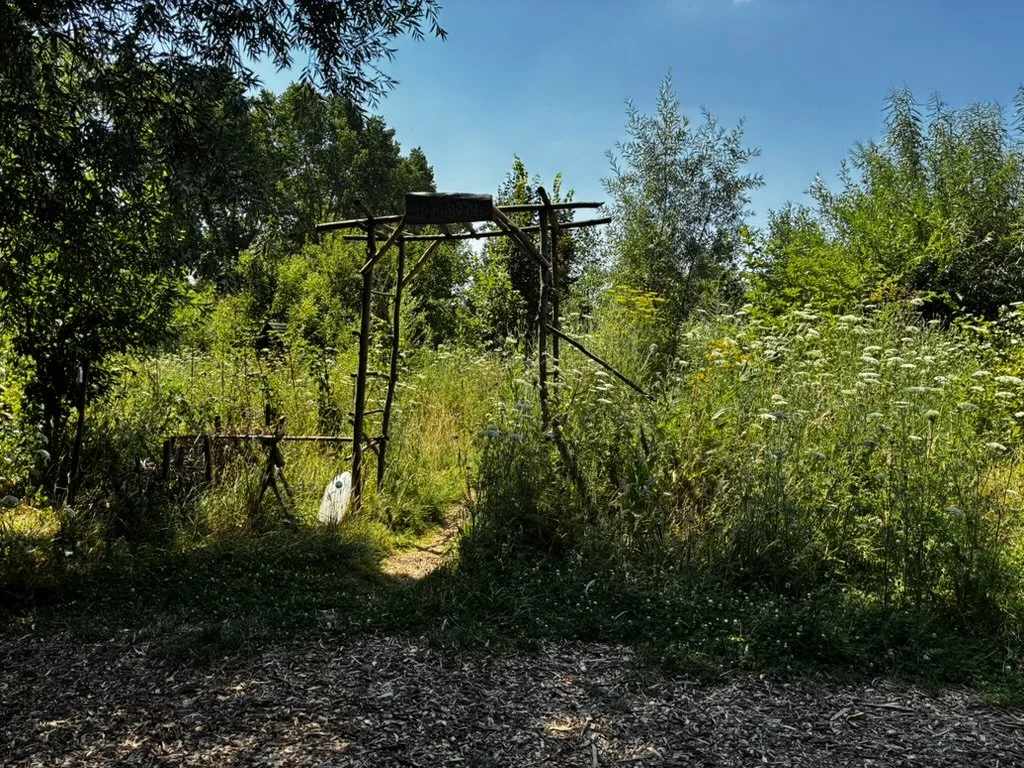
Marc led us along one of the narrow paths maintained for access, while the surrounding vegetation was largely left to natural succession. Management here is guided by purpose rather than appearance.
One of the entrances into the mature food forest ecosystem at De Nieuw Hof.
Could We Manage Nature Less?
What if the healthiest landscapes aren't the ones we manage the most?
What if we only managed landscapes to the minimum extent necessary to achieve our goals?
What if, instead of fighting an endless battle against every "undesirable" plant, we intervened only where it truly mattered?
Recently I visited De Nieuw Hof, a four-hectare mature food forest ecosystem near Sint-Truiden, Belgium. After retiring, Marc, Christel and their daughter Noa Muysoms became the stewards of this remarkable place. Originally established by Dutch permaculture pioneer Taco Blom, the site had become heavily overgrown by the time they acquired it. Many people would have seen a neglected landscape in need of clearing. Marc saw something different. Rather than trying to recreate a tidy orchard, he chose to work with the ecosystem that was already emerging, intervening only where management clearly served a purpose.
The result doesn't resemble a conventional orchard. To many visitors, it might even look untidy. But walking through it tells a very different story. Our visit became an almost continuous feast of tasting fruit and edible plants directly from the landscape. We picked sweet raspberries, sampled numerous varieties of apples and pears, and discovered species that many people have never encountered. There was the aromatic Szechwan pepper (Zanthoxylum piperitum), the unusual medlar (Mespilus germanica), thornless jostaberries (Ribes × nidigrolaria), horseradish (Armoracia rusticana), towering Chinese toon or "onion soup tree" (Toona sinensis), and even cardoon (Cynara cardunculus), a striking perennial vegetable as beautiful as it is edible. I stopped counting after thirty different edible species, and I'm certain there were many more.
Equally remarkable is what isn't there.
No pesticides.
No herbicides.
No synthetic fertilizers.
Very little intervention.
Yet the soils are dark, rich, and alive. Beneficial insects thrive. Pests rarely become serious problems. The ecosystem continues producing an extraordinary abundance of food, year after year.
Nature, it seems, is doing much of the work itself.
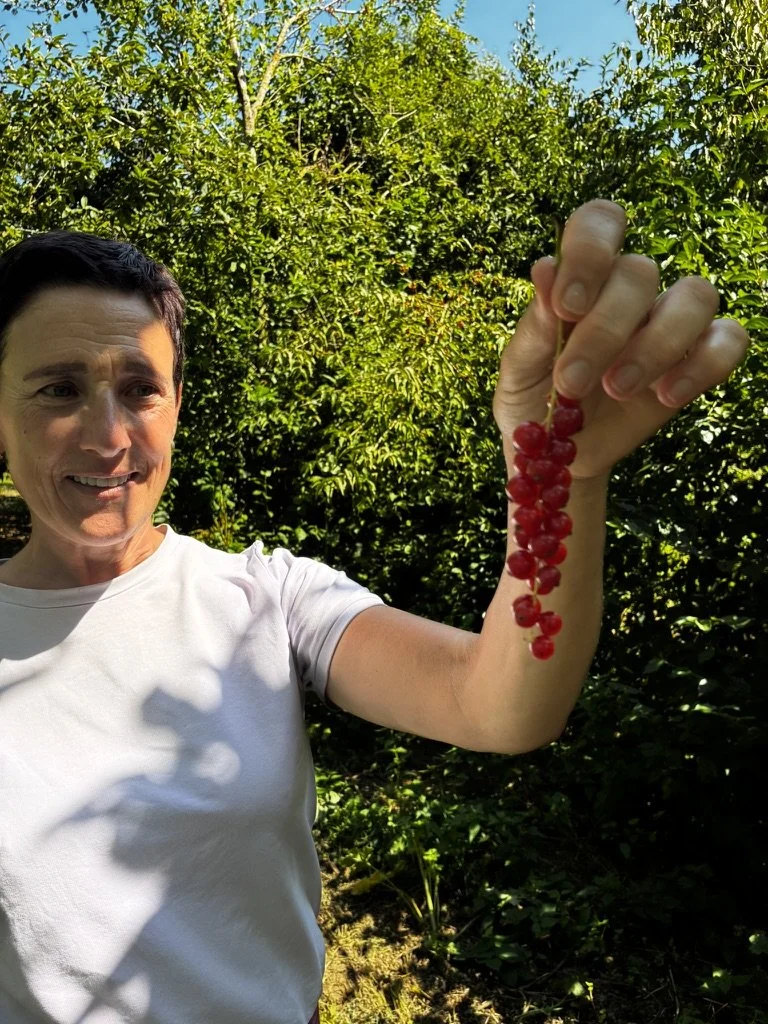
Hilde picking ripe red currants directly from the food forest.
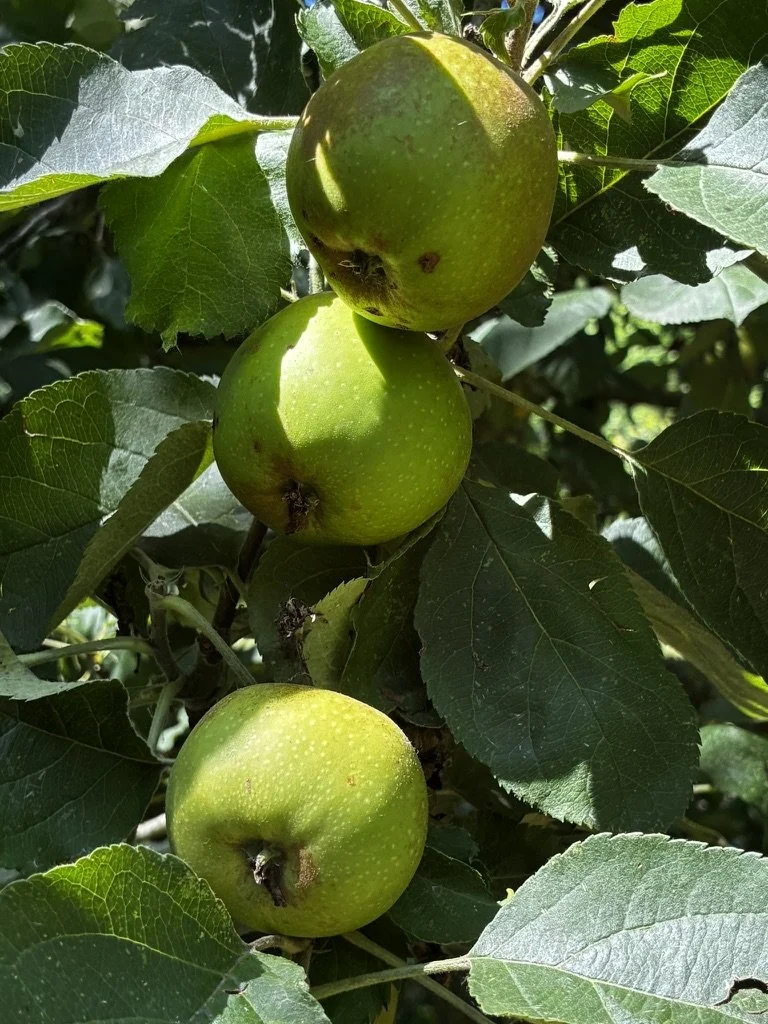
One of the various flavorful apple species we were able to taste.
Challenging Our Definition of "Well Managed"
This experience made me question something that extends far beyond food forests. Why are we so uncomfortable with landscapes that look messy?
In parks, streetscapes, nature preserves, and even our own gardens, we often equate maintenance with success. We remove volunteer plants. We clear undergrowth. We battle every invasive species we encounter. We eliminate anything that interrupts our vision of tidiness. Sometimes those actions are absolutely necessary. Invasive species threaten native biodiversity, alter ecosystem processes, and overwhelm sensitive habitats. They should not be ignored. But not every site has the same objectives. Do we always need to fight every plant that appears? Or are we sometimes managing simply because our cultural expectation tells us that a cared-for landscape should look neat?
How much time, money, fuel, and labor do we invest in landscapes that appear controlled rather than landscapes that truly function well?
Managing for Purpose
Perhaps the question isn't how to remove every unwanted plant., the question is what we're actually trying to achieve.
If our objective is to maintain safe walking paths, then manage the paths.
If we need to establish young trees, then protect the trees.
If an invasive species genuinely threatens biodiversity or the long-term health of the ecosystem, then intervene decisively.
Perhaps the future of landscape management isn't about doing more with less. Perhaps it's about doing less, but doing it more intentionally. By focusing maintenance where it delivers the greatest ecological and social value, we may discover landscapes that are not only more affordable to manage, but richer in biodiversity, more resilient, and ultimately more generous.
Unusual edible plants in the food forest.
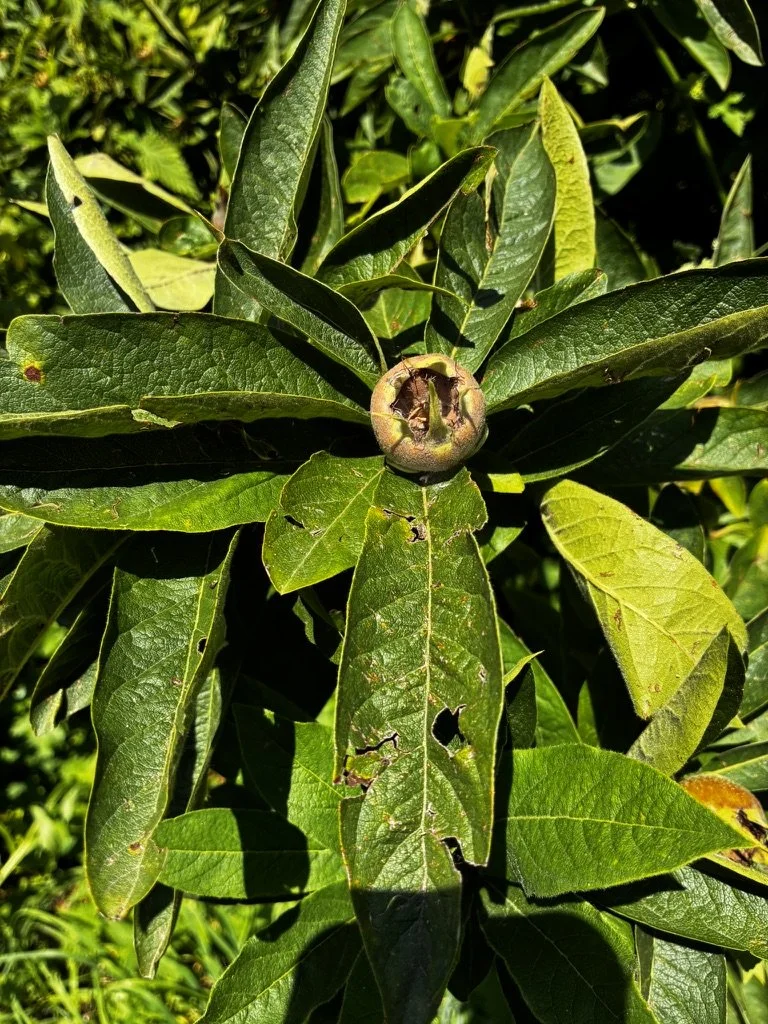
The medlar (Mespilus germanica) is an old fruit tree that was widely cultivated in Europe before apples and pears became dominant. Its distinctive brown fruits are typically harvested in late autumn and eaten only after bletting, a natural softening process that occurs after frost or during storage. The flavor becomes sweet and reminiscent of applesauce, dates, and cinnamon.
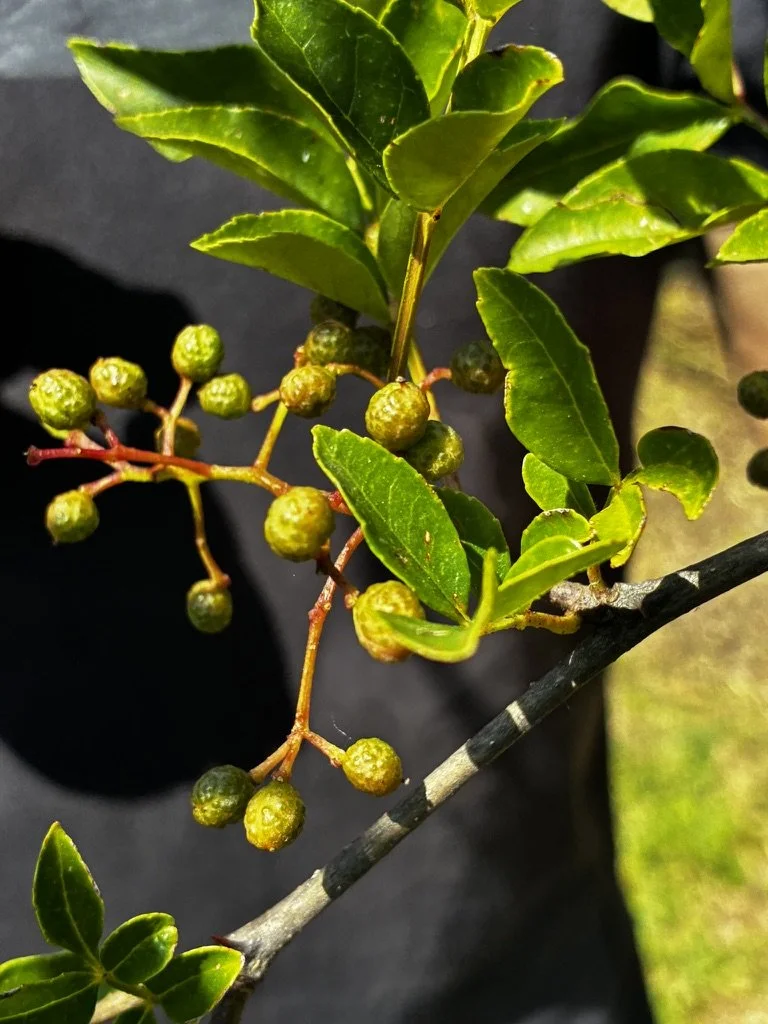
One of the surprises of the food forest was the Szechwan pepper (Zanthoxylum piperitum). Although often mistaken for black pepper, it belongs to the citrus family. Its fragrant seed husks deliver a distinctive lemony aroma and a gentle tingling sensation that is essential to many East Asian dishes. It is one of those remarkable plants that reminds us how much edible diversity exists beyond the handful of species that dominate modern agriculture.
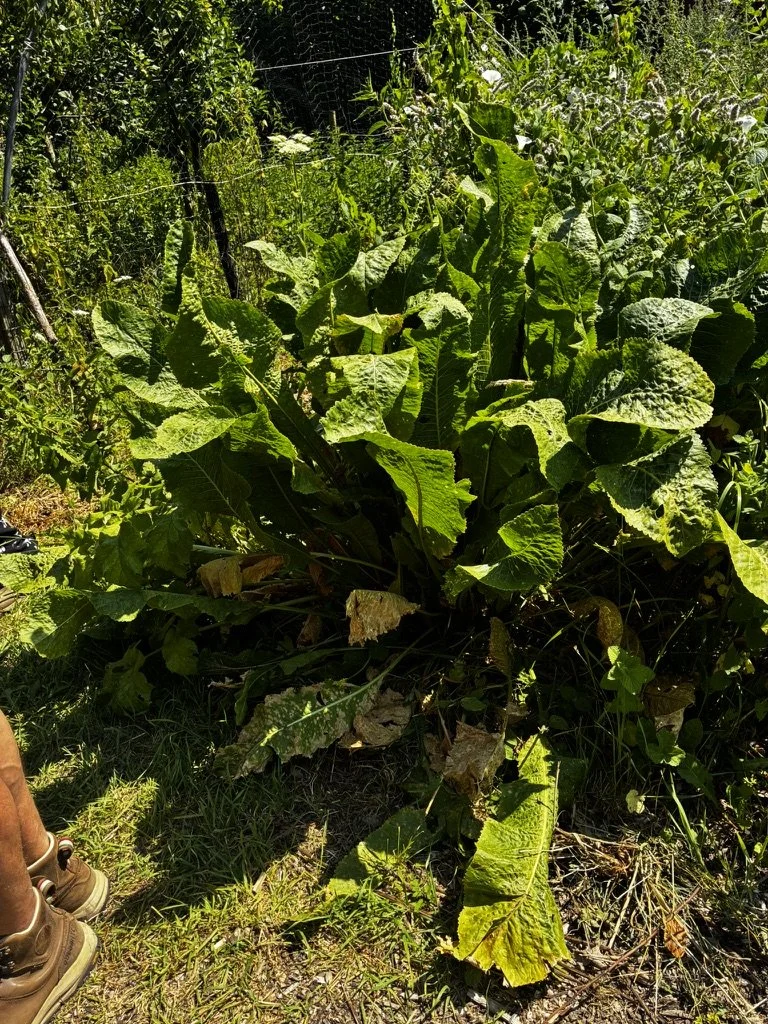
Horseradish (Armoracia rusticana) is a hardy perennial grown for its pungent root, long valued as a culinary condiment. In food forests it also serves several ecological functions. Its deep roots help draw nutrients from deeper soil layers, the broad leaves suppress competing vegetation, the young leaves and roots are edible, and when allowed to flower it attracts a range of beneficial pollinating insects.
Learning to Trust Nature
As landscape architects and land managers, we often see ourselves as controllers of ecological systems. Perhaps our role is evolving. Perhaps our greatest contribution is not designing every outcome, but creating the conditions where ecosystems can thrive and then knowing when to step back. That doesn't mean abandoning management. It means becoming more intentional about where management actually creates value.
In an era of shrinking maintenance budgets, biodiversity loss, and a changing climate, this may not only be the more ecological approach, it may also be the more resilient and economical one.
A Different Measure of Success
De Nieuw Hof is not a prescription for every landscape. A mature food forest ecosystem cannot simply be replicated in every park, streetscape, or nature preserve. But it does challenge one of our deepest assumptions.
Perhaps successful landscape management isn't measured by how much we do but by understanding what truly needs to be done and having the confidence to leave the rest to nature.
So I'll leave you with one question:
Are we sometimes managing landscapes for appearance, when we could instead be managing them for function? Perhaps the future of landscape management lies not in controlling every ecological process, but in learning which ones we can trust.
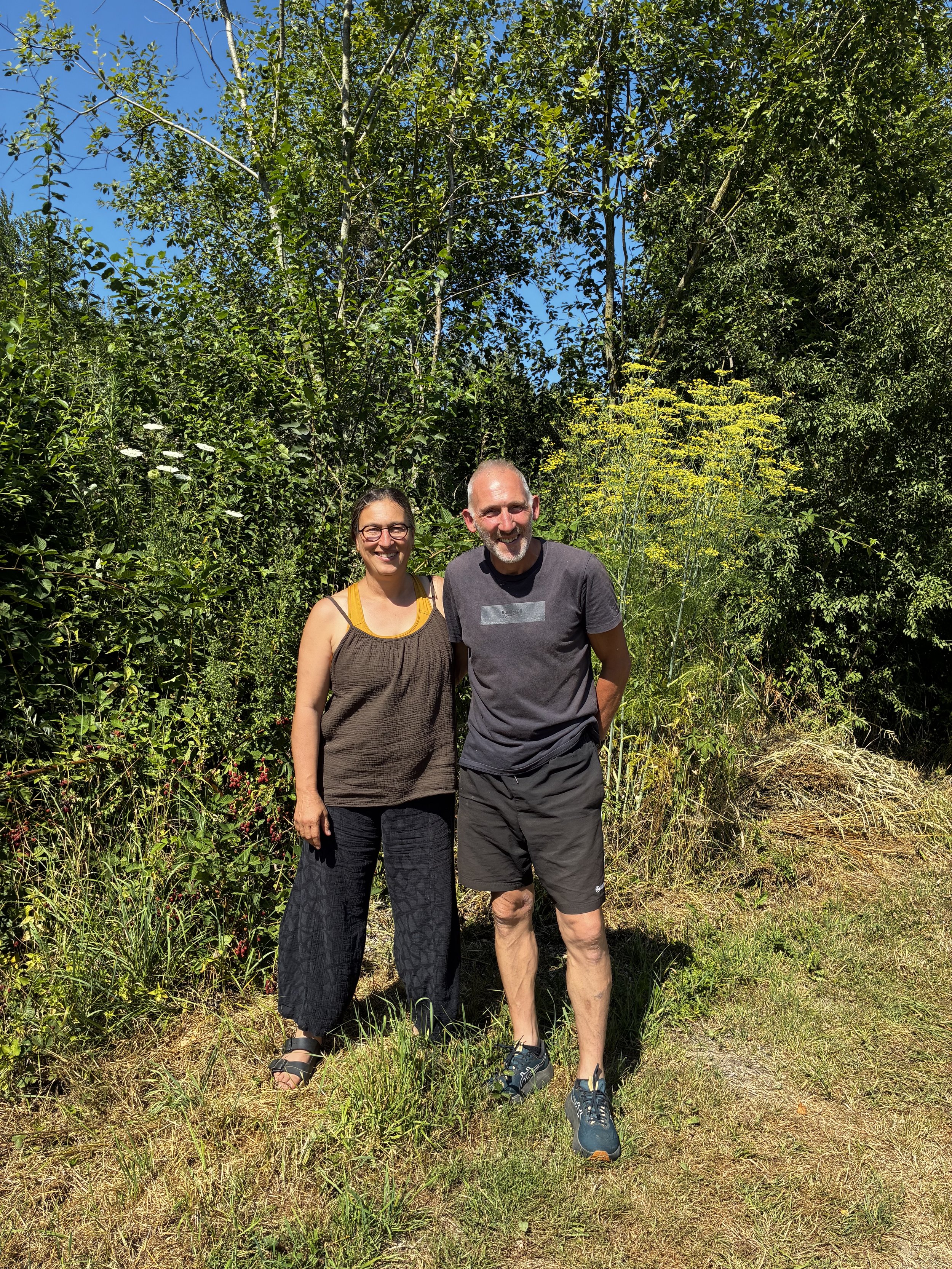
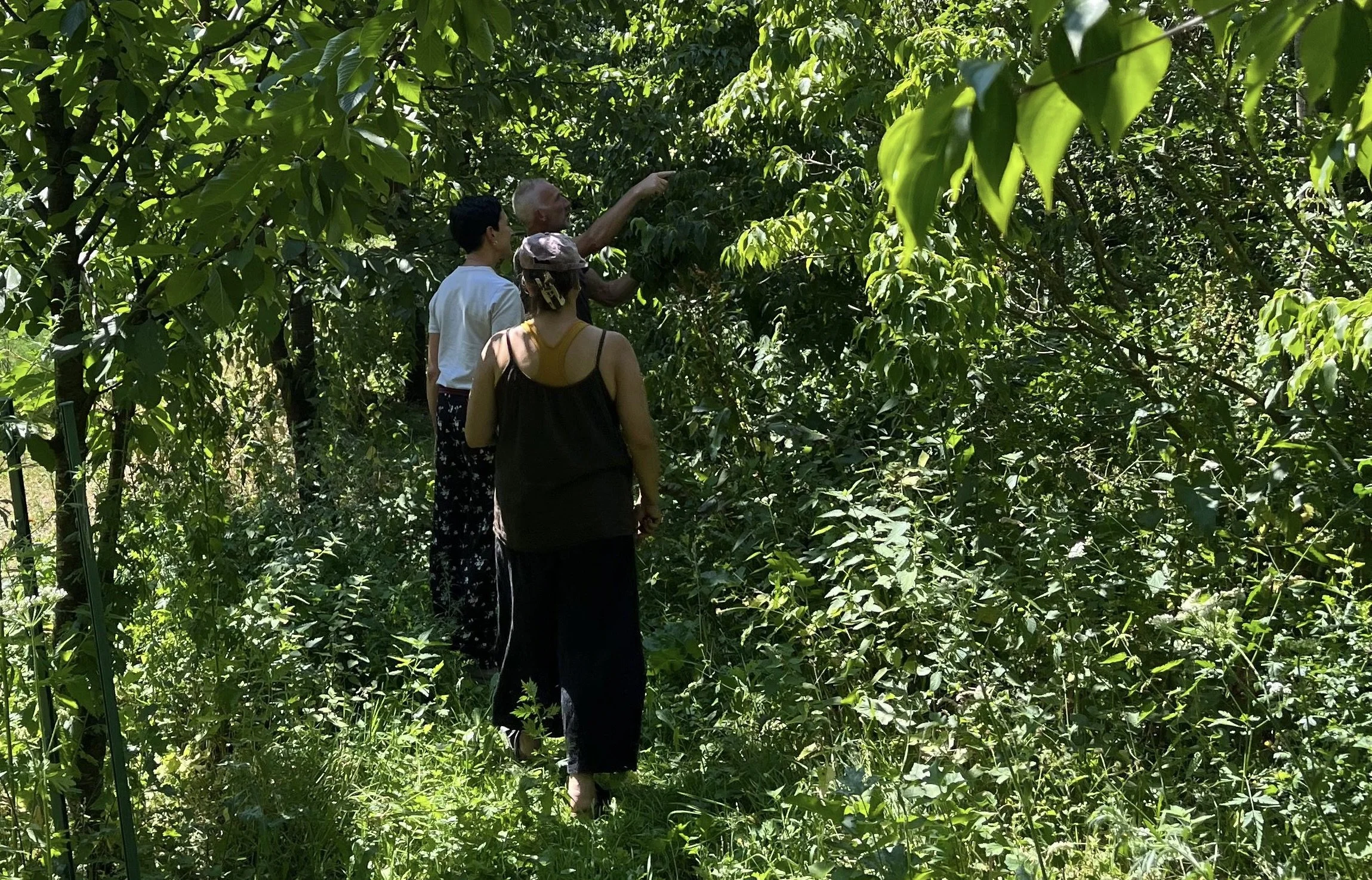
Marc Muysoms, steward of De Nieuw Hof, with Karen following our tour through the mature food forest ecosystem.
Reflection
This article is part of the RE-NATU-RING series exploring how landscape architecture can strengthen the relationship between people and nature through ecological design, stewardship, and long-term resilience.