
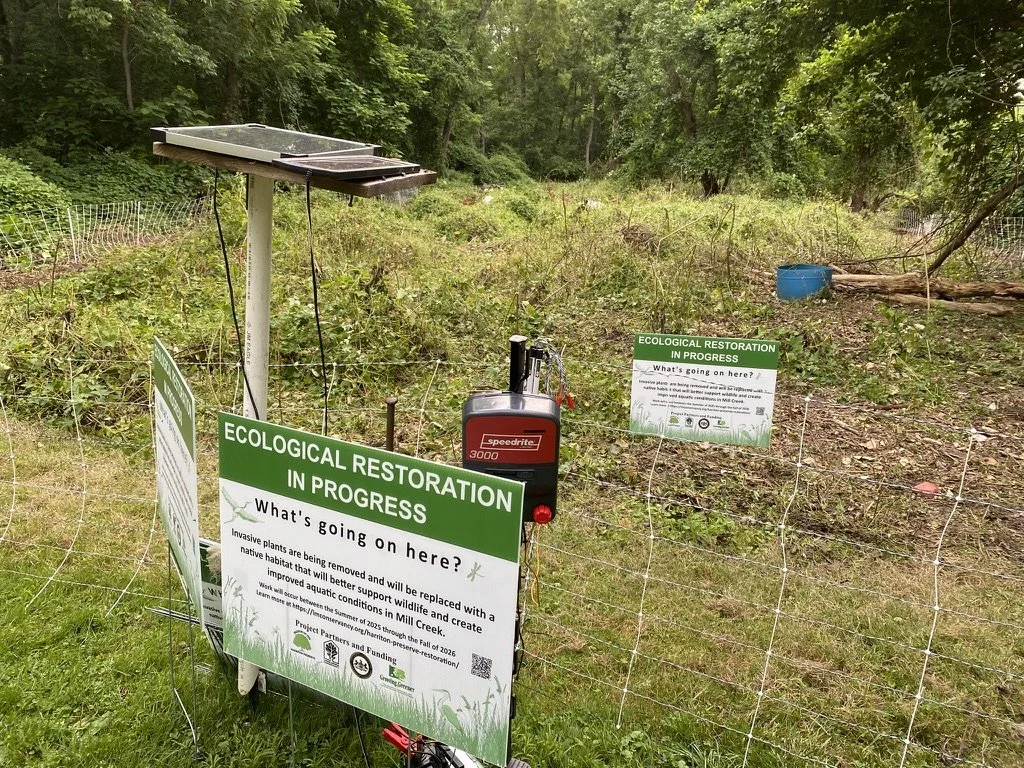
Could we plant less?
What Assisted Natural Regeneration can teach us about restoring landscapes
I recently completed the United Nations Learning for Nature course on Assisted Natural Regeneration (ANR). The course explores ANR in the context of regional forest and landscape restoration, but it left me wondering about its application much closer to home:
Could the same principles change how we approach small restoration projects?
Consider a degraded riparian buffer.
A familiar restoration approach might begin by removing invasive vegetation, purchasing native trees and shrubs, and planting the site. There are good reasons for doing this. Planting gives us control over species composition and density. It produces an immediate, visible result. And if those plants establish successfully, they can accelerate the development of the vegetation structure and shade that will eventually help suppress invasive plants.
But what if the site is already trying to restore itself?
What if native seedlings are waiting beneath the invasive vegetation? What if viable native seeds remain in the soil, or are arriving from trees and other vegetation nearby? Could we spend less effort putting plants into the landscape and more effort helping the plants that are already trying to grow there?
Giving nature a head start
Assisted Natural Regeneration is based on a relatively simple principle: identify the processes preventing natural regeneration and intervene to remove those barriers. That intervention might include controlling invasive or competing vegetation, protecting naturally occurring seedlings and sprouts, reducing other disturbances, and monitoring the resulting regeneration. Importantly, ANR does not necessarily mean not planting. Planting can still be used selectively to introduce species that are missing, increase diversity, establish vegetation where natural regeneration is inadequate, or help a site move more quickly toward a desired ecological condition.
So perhaps the question isn't:
Should we plant or should we use ANR?
A more useful question may be:
How much planting does this particular landscape actually need?
The seed bank beneath our feet
Riparian landscapes make this question especially interesting. Streams move seeds through landscapes. Existing trees provide nearby seed sources. Floodplain soils contain seed deposited over many years. Roots and stumps also provide opportunities for vegetative regeneration. Removing invasive vegetation can reveal a surprising amount of life. But relying on that regeneration isn't without risk.
A site's seed bank contains desirable native plants but it also contains invasive species. And not every native species needed for a resilient riparian community will necessarily be present. Therefore, it is important to first observe and evaluate to inform your restoration approach because natural regeneration isn't a prescription.
The race for light
There is another complication. Imagine removing a dense stand of invasive shrubs from a streambank.
Suddenly, there is light.
That can be exactly what suppressed native seedlings need. Unfortunately, it also helps exactly invasive plants thrive. This creates an important difference between an ANR-dominated approach and an intensive planting strategy.
Planting a relatively dense layer of trees and shrubs can potentially accelerate the development of vegetative cover and, eventually, shade. ANR may leave the landscape more open for longer while natural seedlings establish. During that period, invasive plants may repeatedly try to reclaim the site.
So the apparent economic equation:
fewer purchased plants = lower restoration cost
is probably too simplistic.
Perhaps ANR saves money on plant material but requires additional years of monitoring and invasive-species management. The question we should really be asking is:
What is the total investment required to reach a resilient native plant community?
ANR requires a different kind of ecological knowledge
Imagine two crews clearing invasive vegetation.
The first crew will clear the site and plant it afterward. Their task can be relatively straightforward: identify the invasive vegetation and remove it.
The second crew is practicing ANR.
Their task is different.
Before cutting something, they need to look carefully. Is that small stem another invasive shrub? Or is it a naturally regenerated native tree that could someday become part of the site's canopy? What about the seedlings beneath it? The stump sprouts? The young shrubs appearing between established invasive plants?
ANR requires people who can read the landscape. They must recognize desirable regeneration, often at the difficult seedling and sapling stages, and selectively remove competing vegetation without destroying the very plants the restoration is intended to encourage. Done poorly, an ANR project could remove part of its own restoration potential before anyone realizes it was there.
So ANR may reduce our dependence on purchased plants while increasing our dependence on ecological knowledge, careful observation and skilled management.
That isn't necessarily a disadvantage. It may be one of its most interesting qualities.
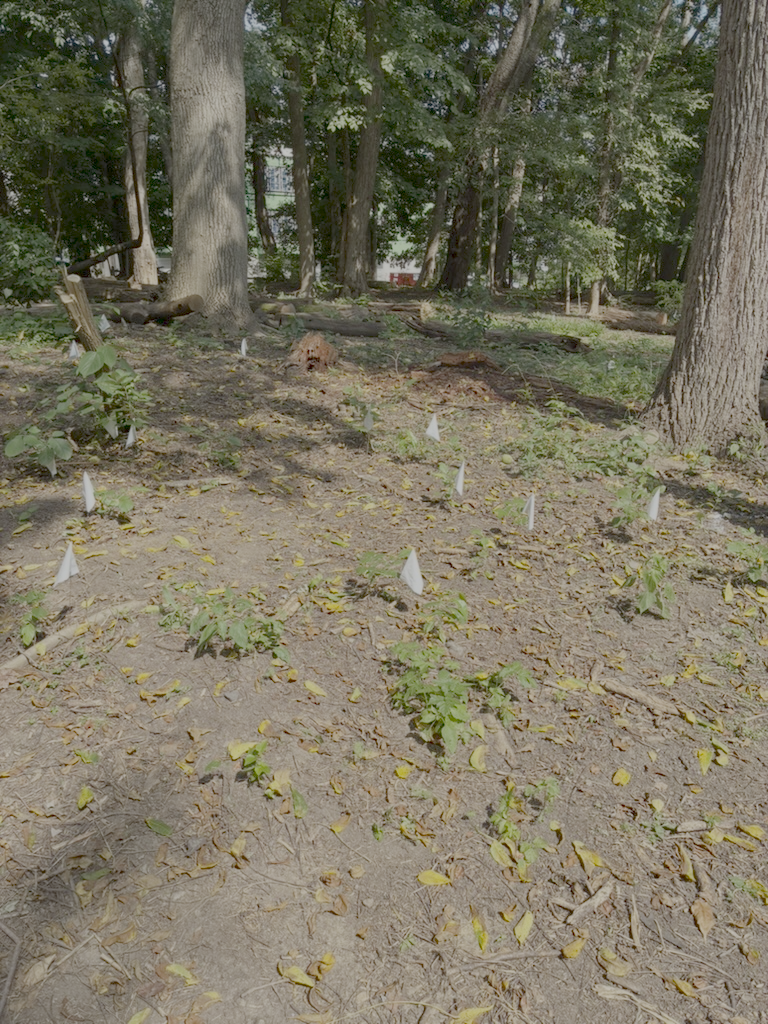
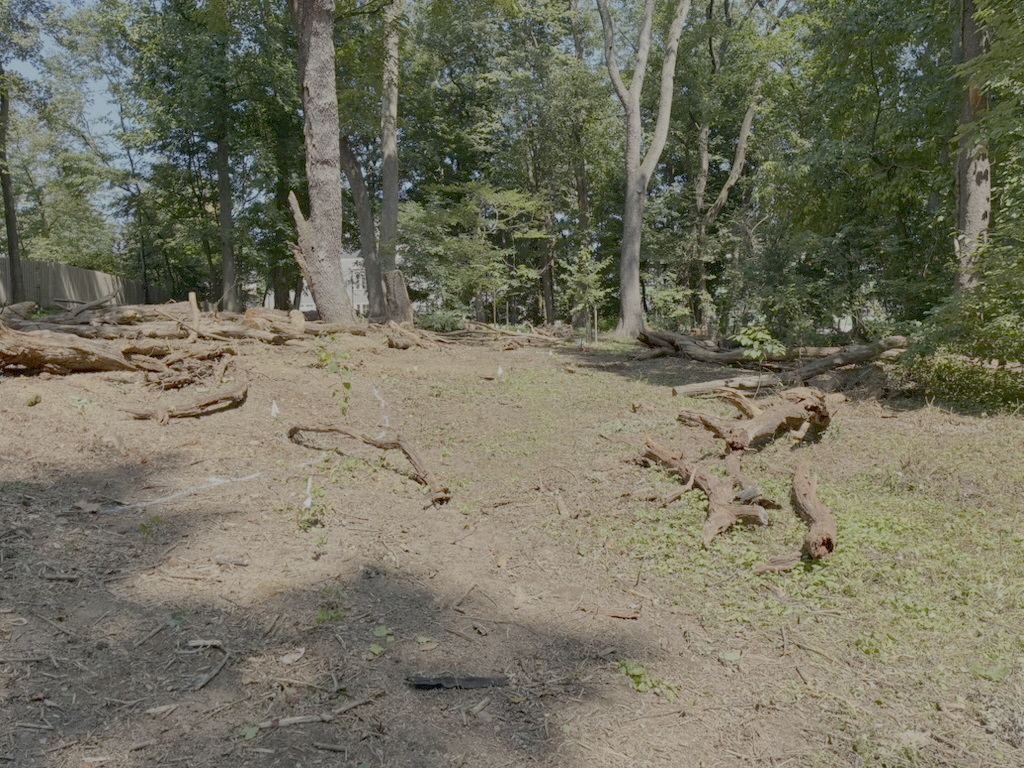
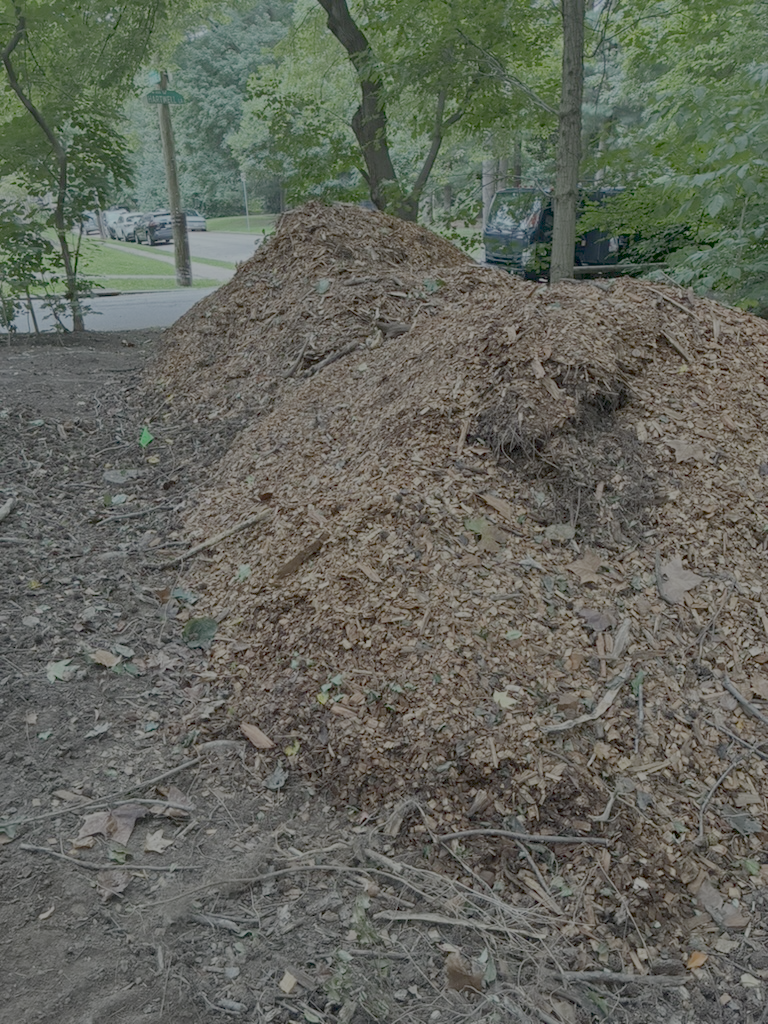
At the woodland restoration project at Pastorius Park in Chestnut Hill, Pennsylvania, assisted natural regeneration is being combined with selective new planting. White flags identify naturally regenerated native seedlings that will be protected while invasive vegetation is cleared from around them. Logs from trees that have been removed because they were dead, declining, or invasive are retained within the woodland as nurse logs. Other removed trees are chipped on site and reused as mulch around new plantings.
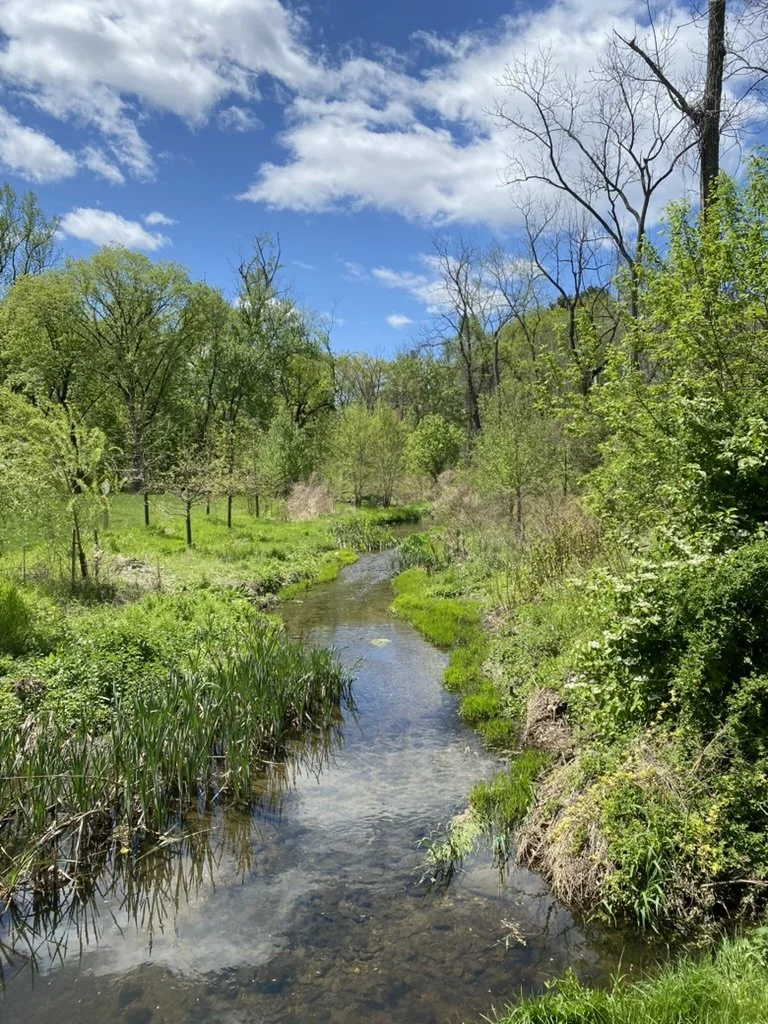
This riparian buffer contains both desirable native vegetation and invasive species. Learning to recognize what is already present and what should be protected can help determine the appropriate restoration approach.
From planting volunteers to landscape observers
Community restoration often revolves around planting days. They are understandable, social and satisfying. A group arrives in the morning, plants several hundred trees, and by afternoon everyone can see what they accomplished.
ANR presents a communication challenge. Imagine telling the same group:
Today we're going to identify naturally regenerating plants, mark the ones we want to keep, selectively remove the vegetation competing with them, and then come back periodically to see what happens.
The transformation is less immediate. But perhaps the experience could ultimately be more educational. Instead of only teaching someone how to plant a tree, we could teach people how to recognize the processes through which a landscape becomes a forest.
What is regenerating? Where did that seedling come from? Why is regeneration occurring here but not ten feet away? Which plants are competing? Which should we protect? Where is nature succeeding without us? And where does it need our help?
A volunteer begins to move from being simply a source of restoration labor to becoming an observer of ecological processes.
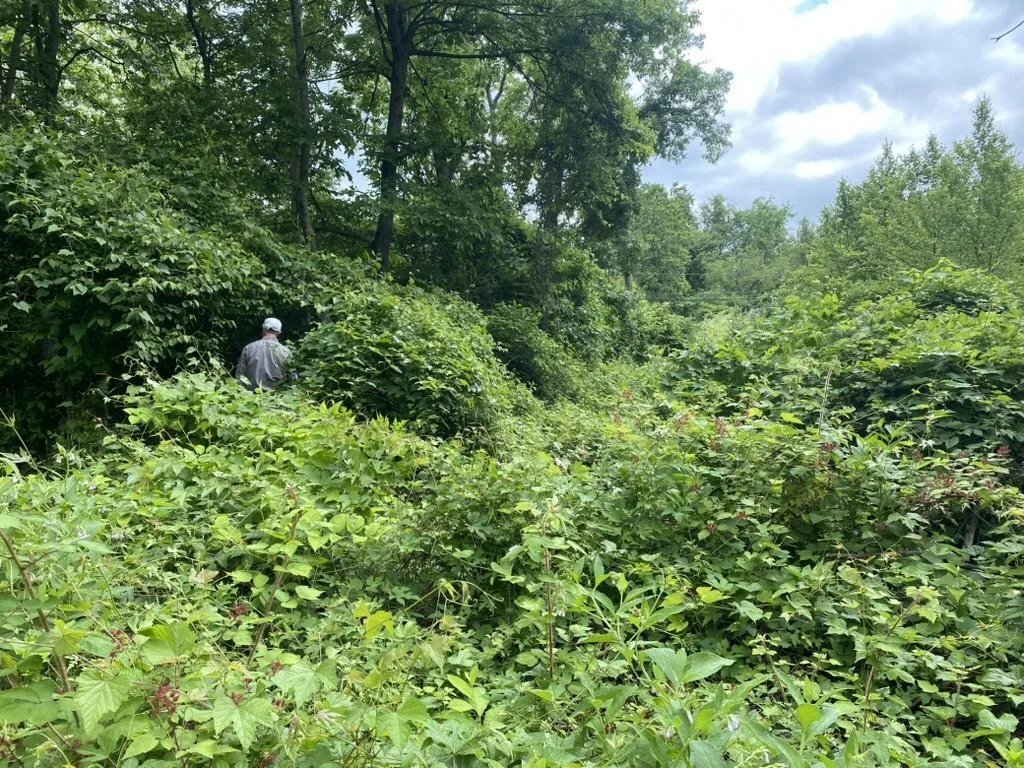
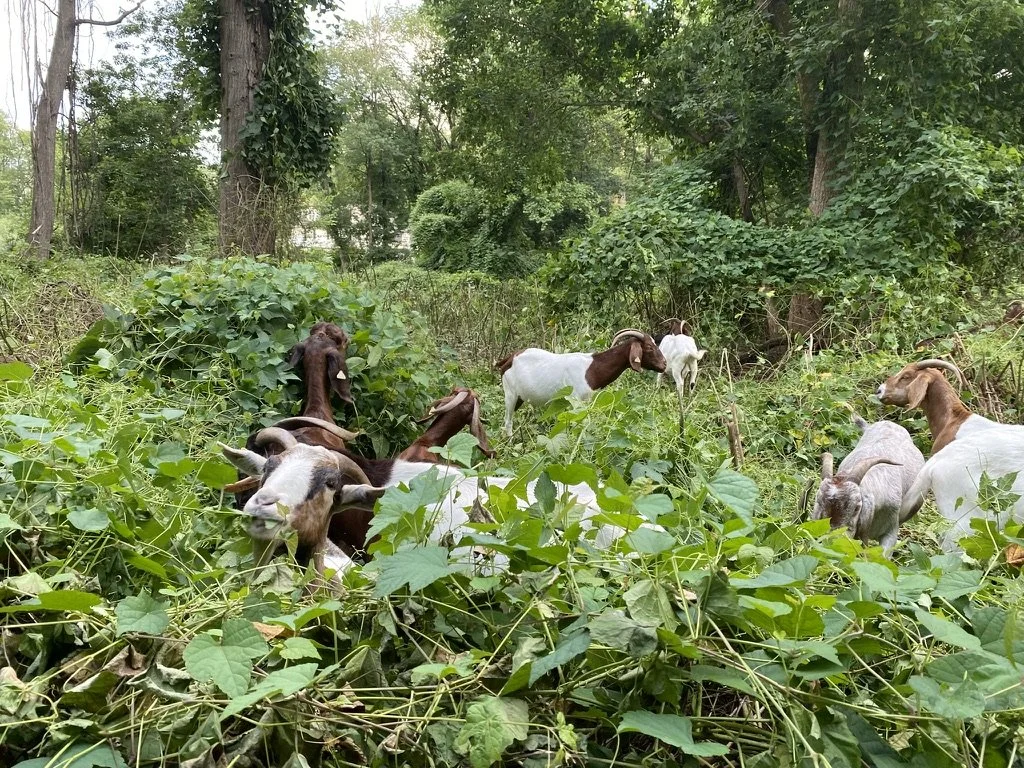
When invasive vegetation has blanketed an entire site, the best first step may be a less selective treatment, such as targeted goat browsing. After the initial clearing, careful observation becomes critical for identifying the site's potential for natural regeneration.
That idea is particularly compelling to me. Reading the landscape before changing it. ANR doesn't convince me that we should stop planting. Quite the opposite: it raises more interesting questions about when, where and why we plant.
There will be sites where natural regeneration is inadequate. There will be sites where invasive pressure is so intense that waiting for natural succession is impractical. There will be places without adequate seed sources, places where important species are absent, and places where rapid establishment of woody vegetation is an important project objective. Those landscapes may need substantial planting.
Other sites may already contain much of the biological machinery required for recovery. Perhaps those landscapes need something different from us. They may need us to remove invasive competition, protect what is emerging from threat such as deer pressure, watch carefully and resist the urge to immediately fill every empty space.
Between those extremes is an interesting spectrum:
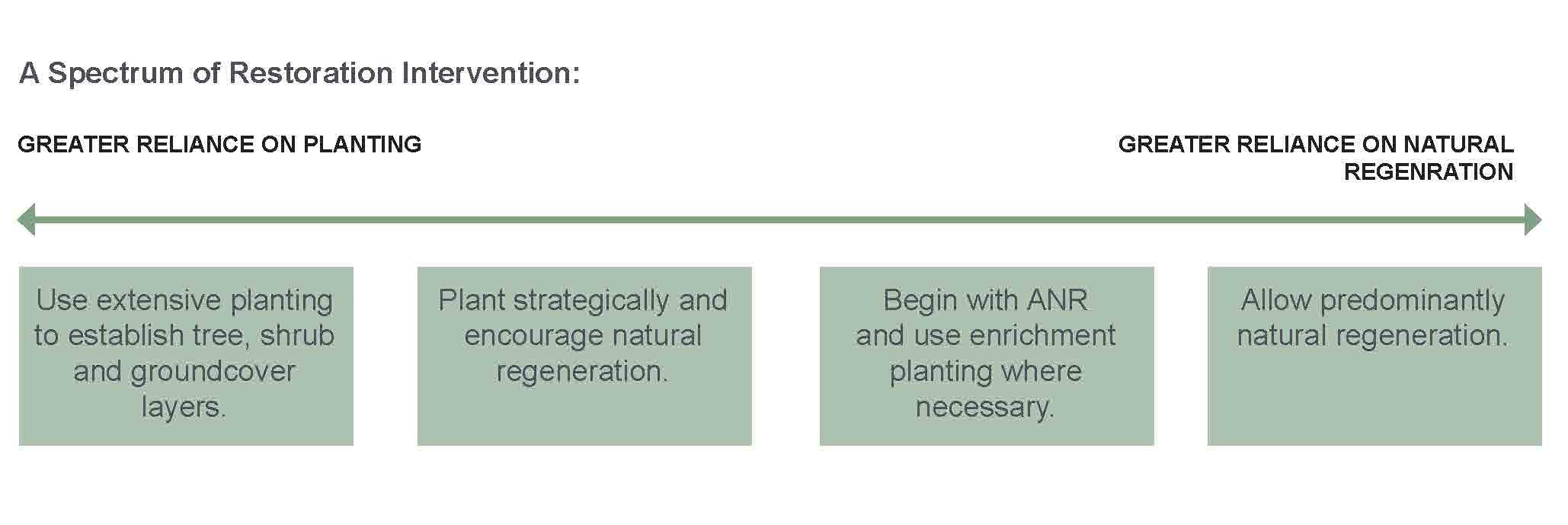
The appropriate point on the spectrum depends on the regenerative capacity, ecological condition and objectives of the site.
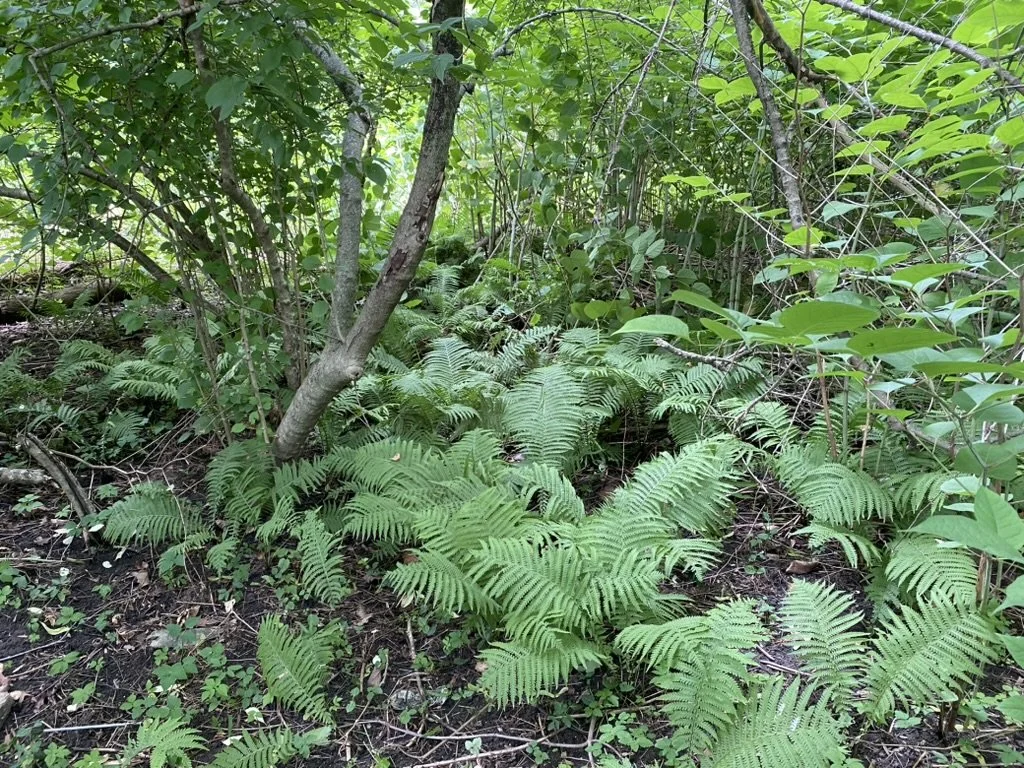
It is important to learn to read the landscape to be able to identify areas such as this patch of native ferns (to protect) surrounded by invasive Japanese knotweed (to remove).
A RE-NATU-RING principle
This leads me toward a broader principle that I think extends beyond Assisted Natural Regeneration:
Learn to read the landscape before deciding how to change it.
That means helping people become more attentive observers of the landscapes around them.
For landscape practice, it means beginning restoration not only by asking:
What should we plant here?
but also:
What is this landscape already capable of doing for itself?
Then we can ask what is preventing that recovery, what we can protect, what barriers we can remove and finally, what we actually need to add. Perhaps good restoration isn't always about doing more, but about understanding the landscape well enough to know what needs to be done and where our intervention will matter most. The goal isn't to intervene less, it is to intervene more deliberately.
Further Reading